Venezuela - A Golf Course, the Latrines Nobody Ordered, and a Week That Lasted All Summer
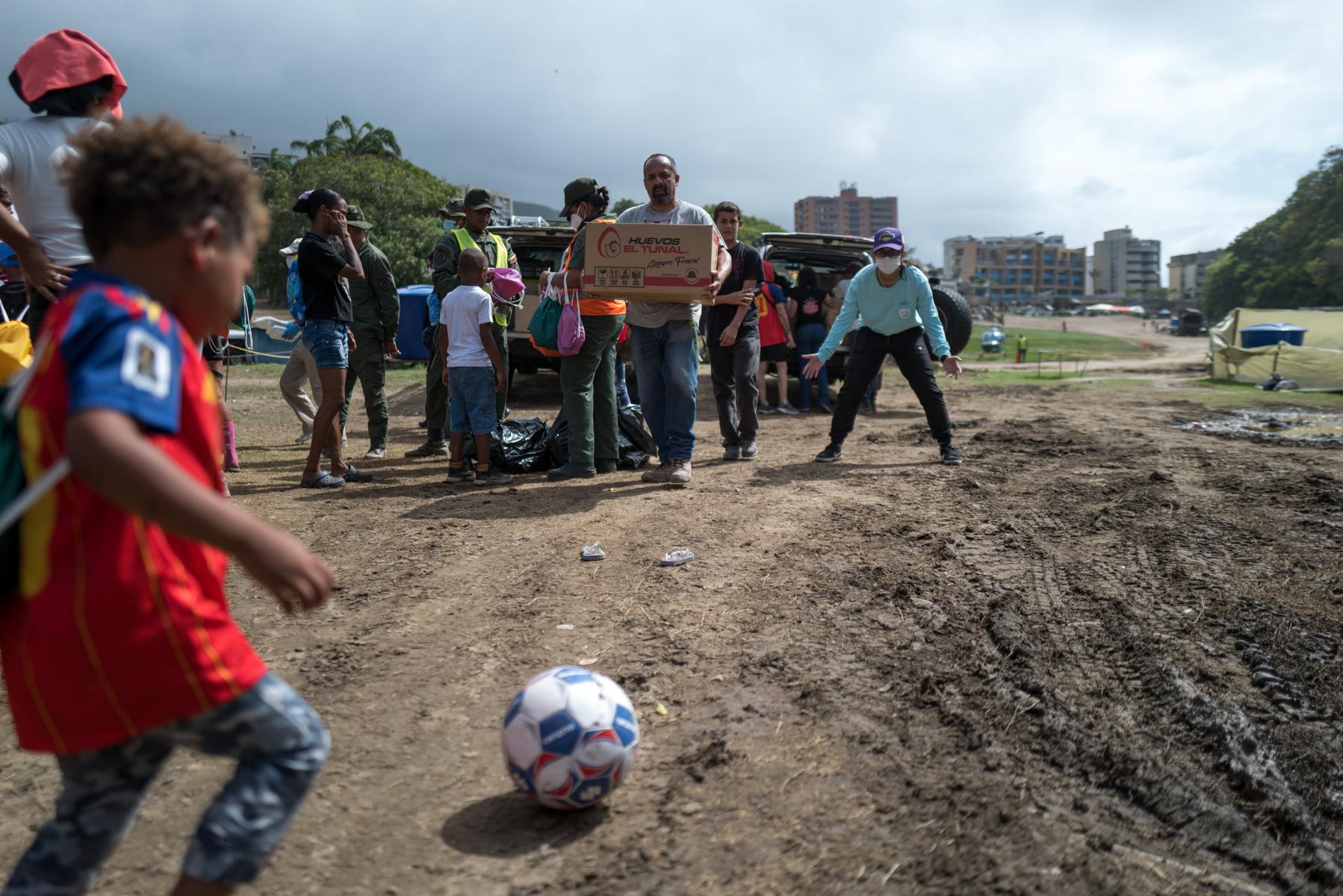
In the afternoons the wind picks up, and when it does, it lifts the dust from what used to be fairways and drives it across the camp. Children play football right through it, weaving between tents and people as if neither were there. A few meters away, doctors and nurses stride between the tents of a field hospital. Vehicles push through in every direction: supply trucks, pickups, the cars of organizations that arrived this morning and the cars of organizations packing up to leave. On one side of the grounds a team is putting up tents, on the other a different team is dismantling the base it has been running. A unit of soldiers marches past in formation. Then a helicopter comes in to land, and for a moment the rotor wash adds its own cloud of dust to everything else. People walk in from the rubble, covered in it. Some are residents who have spent the day digging, some are volunteers. Among them are the Topos, the Mexican volunteer rescue brigades who became famous after the 1985 Mexico City earthquake. They arrive in the evening, sleep a single night on the golf course, and leave again the next morning to keep digging. And in the middle of all of it, in what was once a water hazard, lies a murky pond where turtles are still swimming, unbothered, as if the course had never closed.
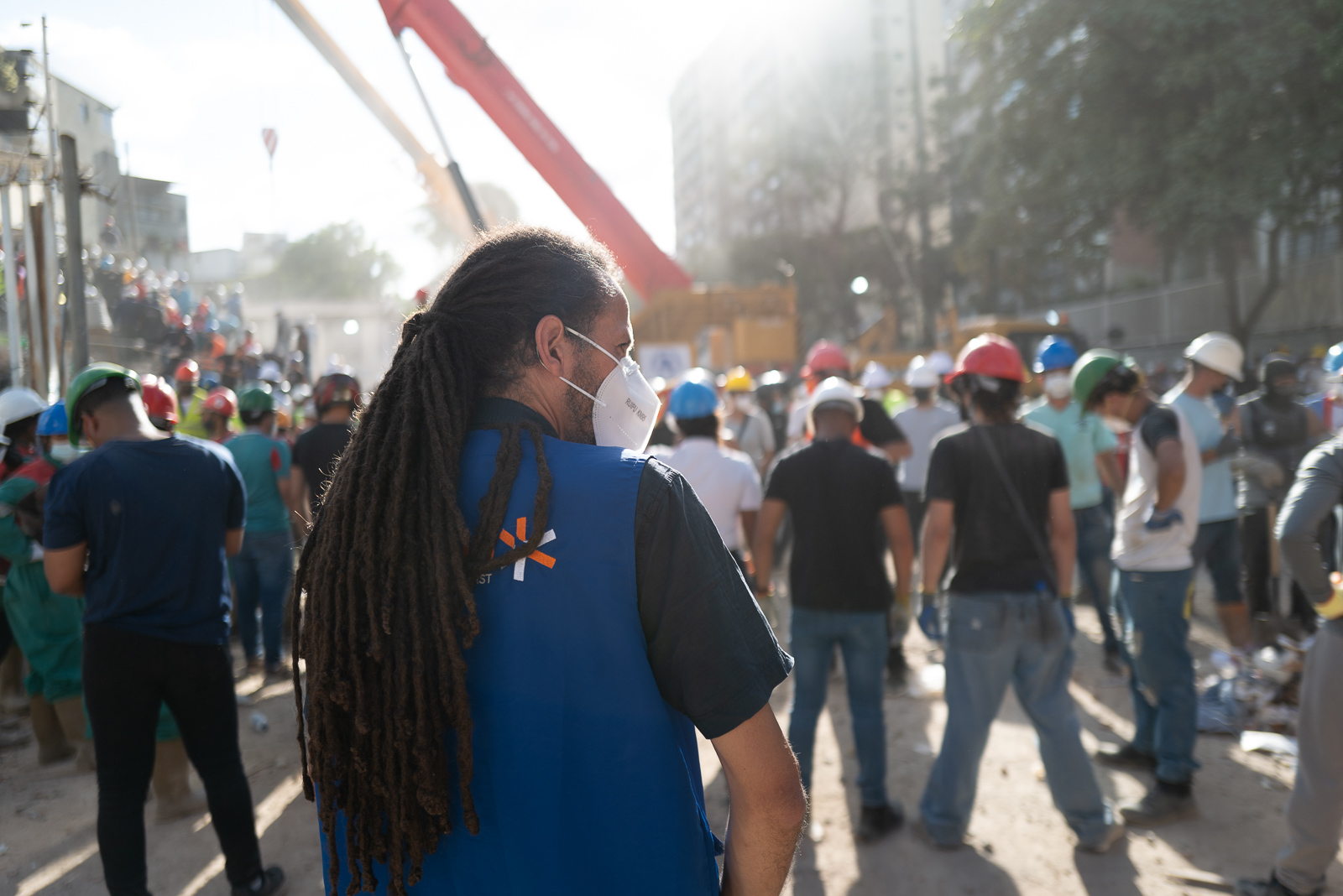
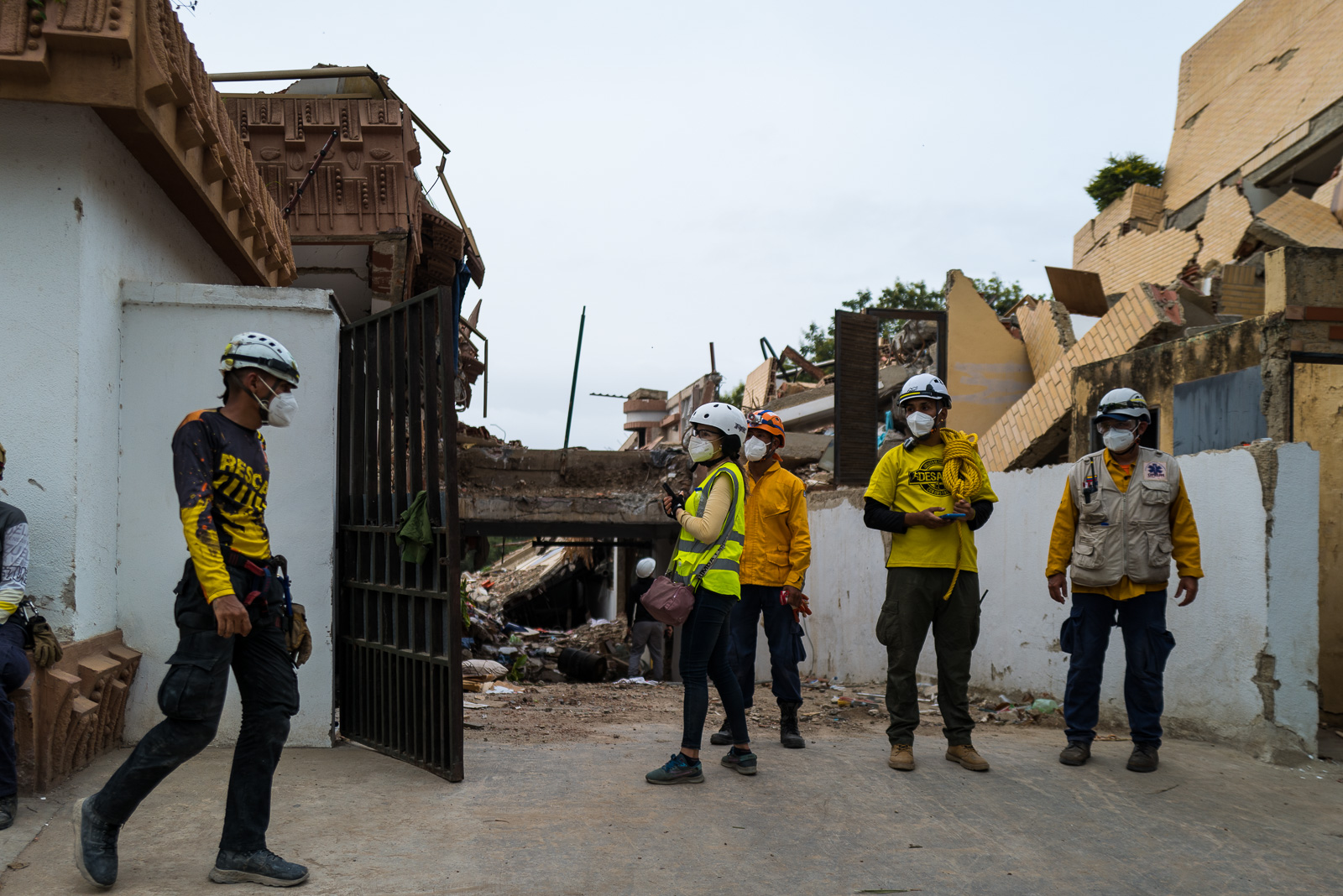
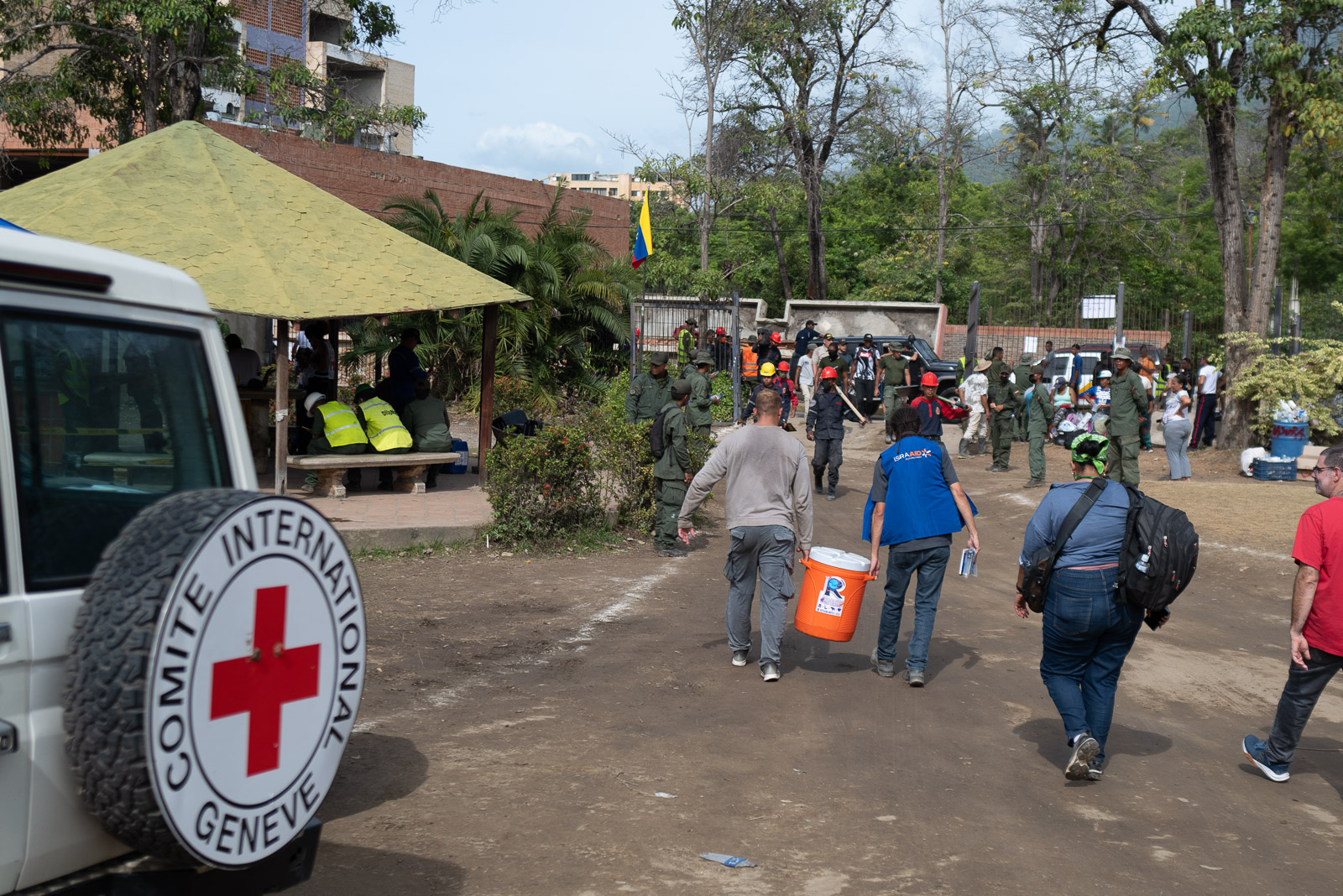
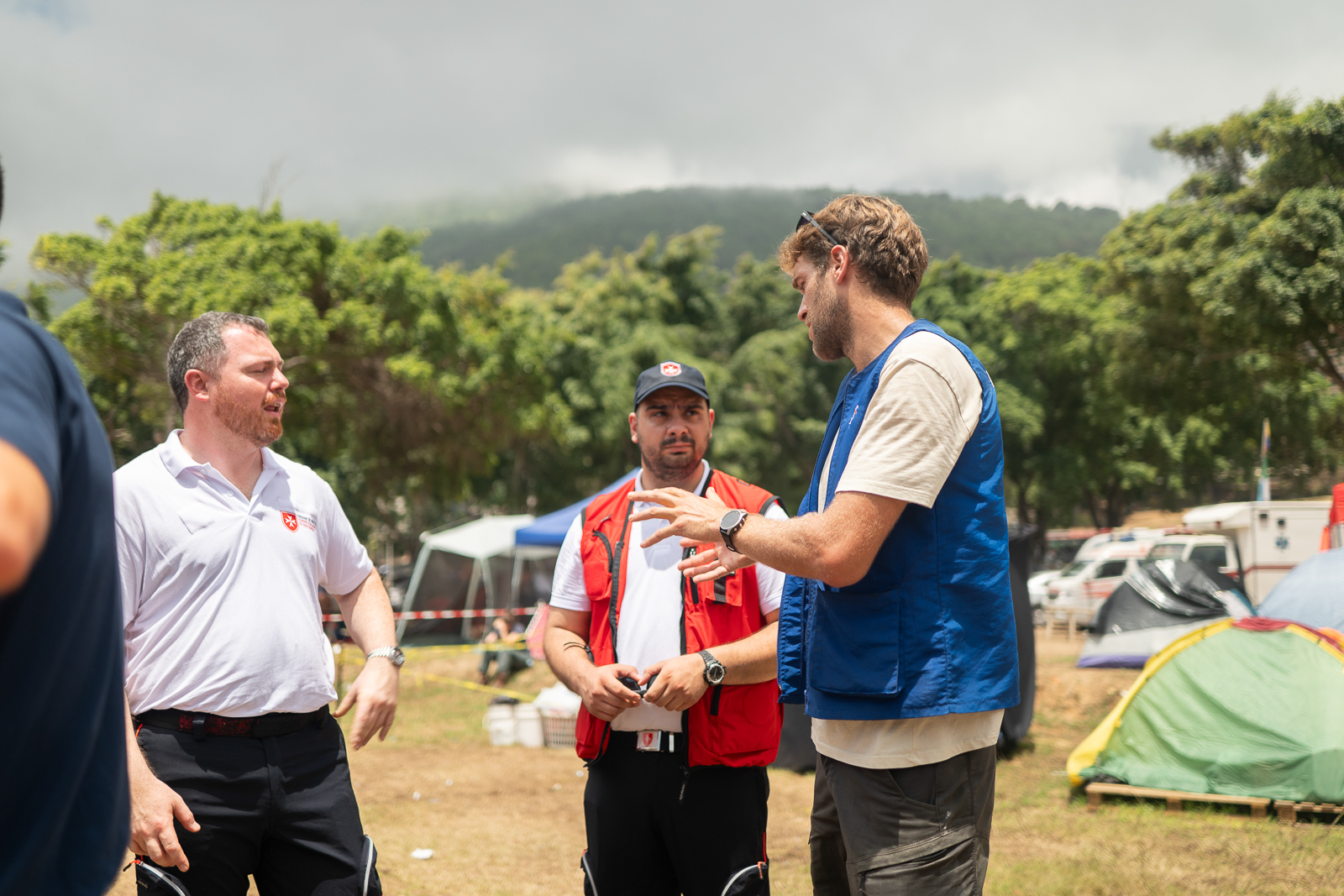
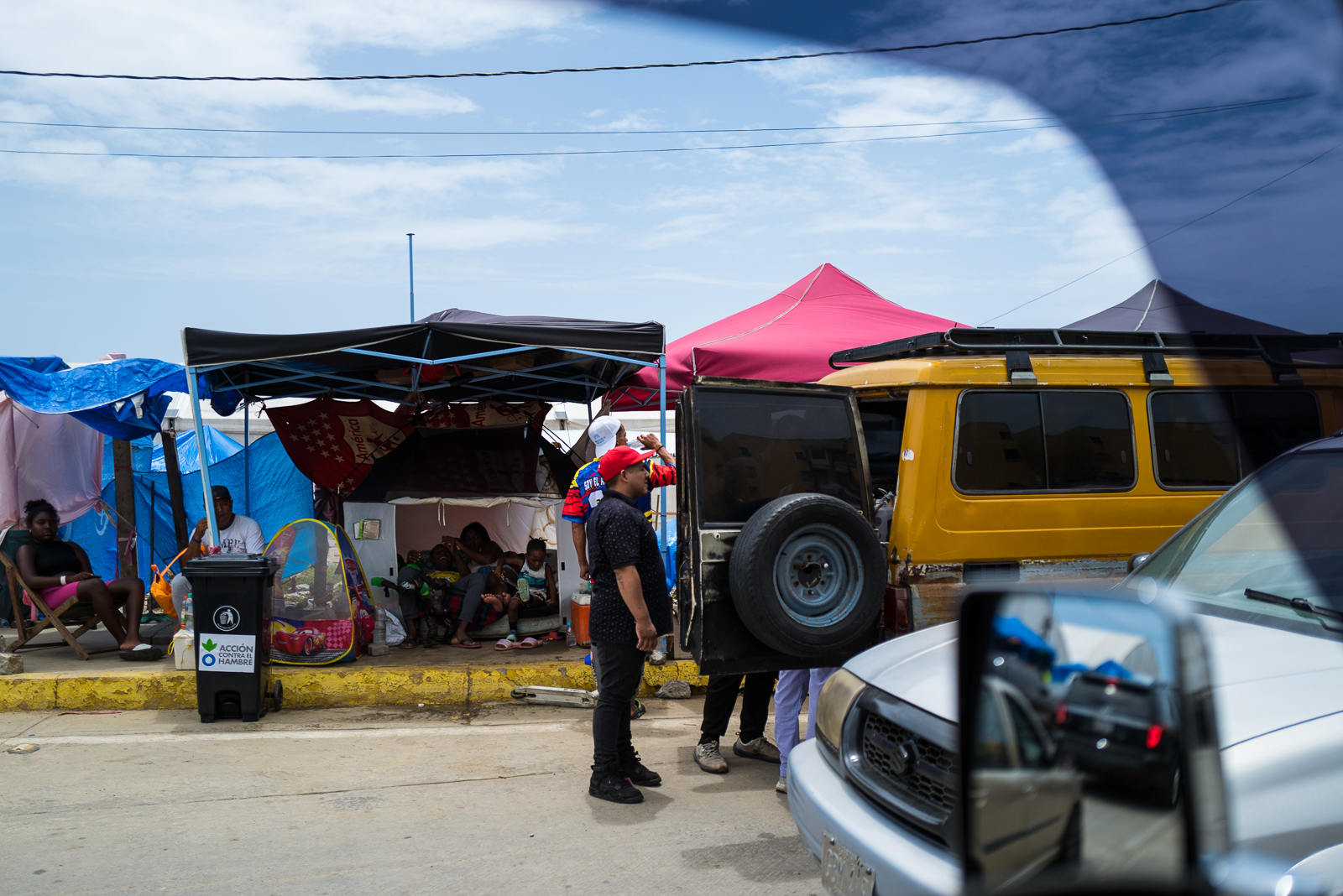

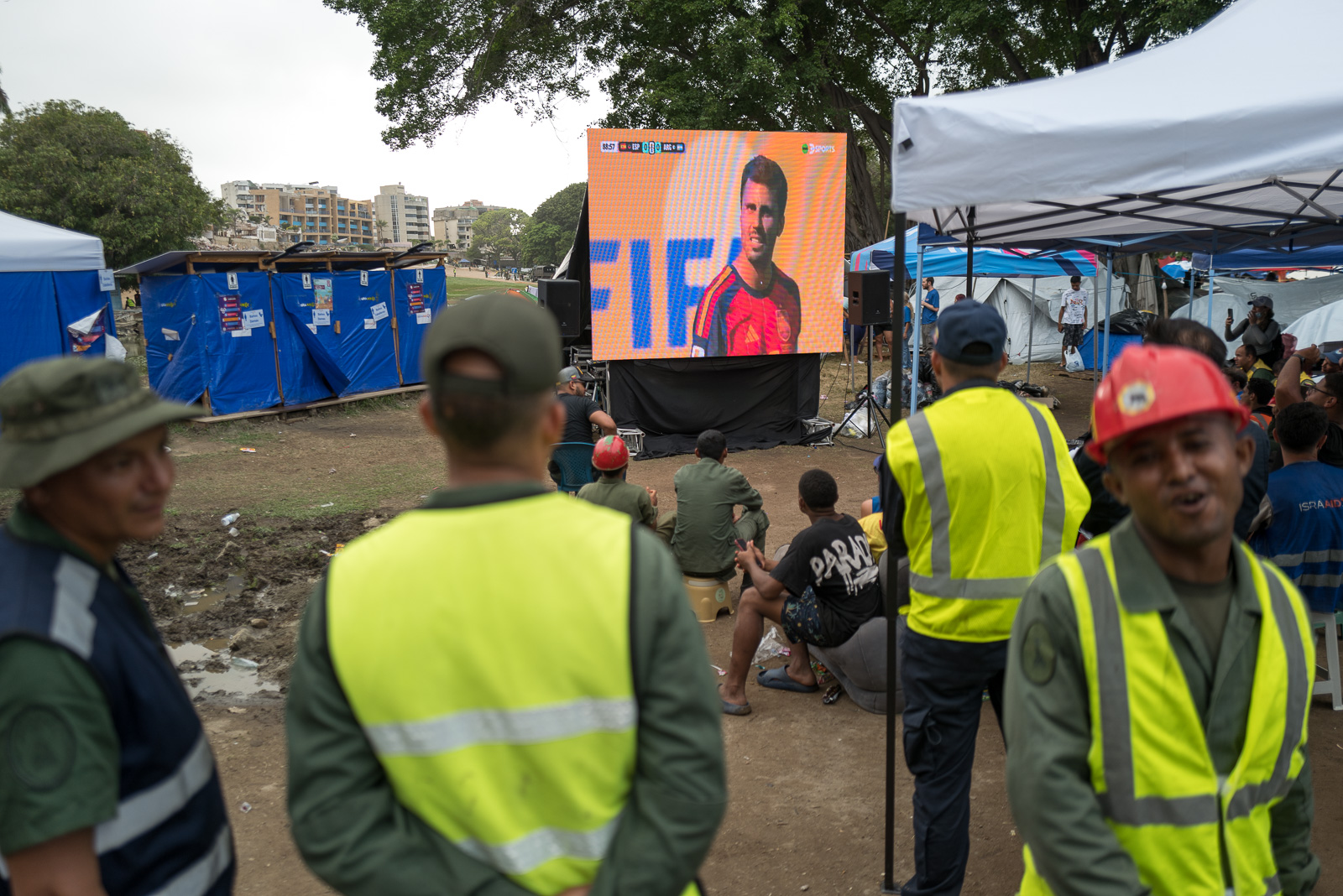
The closest description I have found for this place is a small city assembling and disassembling itself at the same time. It was not the only camp. In the weeks after the earthquakes, dozens of shelters and collective sites opened across La Guaira and Caracas, in stadiums, sports halls and schools, each with its own dynamics and its own people keeping it running. The Golfcamp, as everyone called it, was simply the one where much of our work happened, and the one I keep coming back to.
To understand why so many people ended up in places like this, it helps to look at the map. Venezuela's central coast is a narrow strip of land squeezed between the Caribbean and the Ávila, a mountain range that rises so abruptly from the sea that Caracas, on its far side, sits almost a thousand meters above the port city of La Guaira. A highway links the two, threading through tunnels and switchbacks, the sea flashing up between the slopes. It is a spectacular landscape and a fragile one: houses stacked up hillsides that look too steep to build on, and on the coast, a city with nowhere to grow except upward.
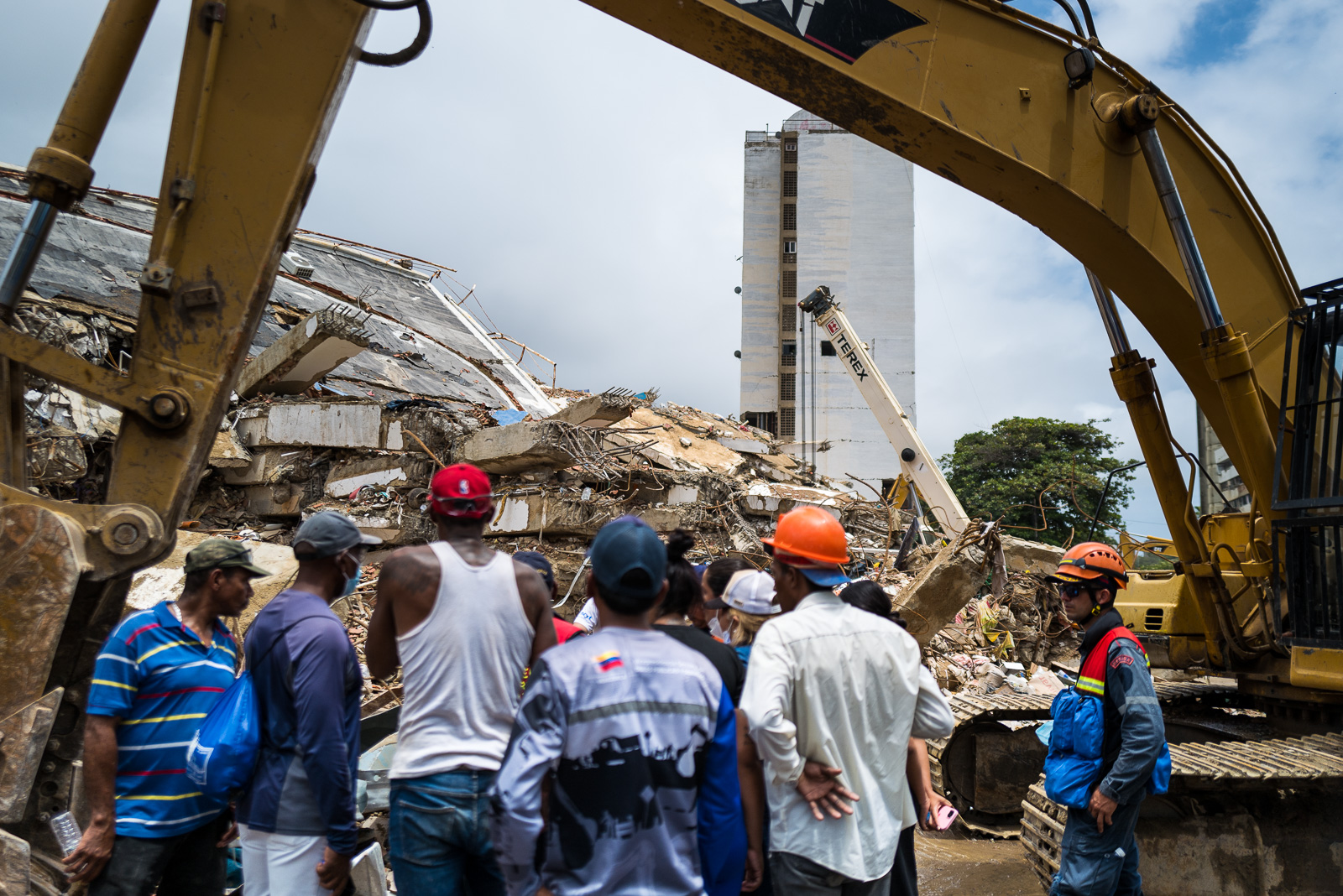
On June 24, 2026, two earthquakes of magnitude 7.2 and 7.5 struck less than a minute apart, with epicentres in Carabobo and Yaracuy states, west of Caracas. La Guaira, despite lying well over a hundred kilometers away, was hit hardest. The unreinforced masonry buildings along its slopes, many of them built incrementally over decades without engineering oversight, came down in numbers that are hard to describe without sounding like you are exaggerating. In the most affected neighborhoods, my own rough estimate is that ninety to ninety-five percent of buildings were destroyed or too damaged to live in. Official figures counted more than 1,700 dead within the first week, with thousands still missing. Families were searching the rubble for relatives for weeks after the shaking stopped.
This was the situation when we began our work on the golf course.
The camp had been set up as a transit site, a place where displaced people could receive immediate assistance before moving on to more stable accommodation. The operational assumption was that it would stand for about a week. By the time I left, it was still there. As of late September, it still is. Anyone who has worked in displacement long enough will recognize the pattern: transit facilities outlast their planned lifespans with a regularity that, in any engineering discipline, would long ago have forced a revision of the underlying model. We followed our instinct on this from the start and planned for longer, which turned out to matter.
Our focus was WASH, short for water, sanitation and hygiene: the infrastructure of physical survival in its most literal sense. Clean water, functioning latrines, places to wash your hands. And this is the thing about WASH after a large disaster: water gets covered. Food, clothes, mattresses, tents, hygiene kits and medical supplies get covered, and in Venezuela they arrived quickly and in volume, because Venezuelan society mobilized with remarkable speed and generosity. What almost always falls through the gap is sanitation, specifically toilets. Donations follow the logic of visible need, and nobody donates a latrine. Yet in a crowded camp, a latrine is one of the first things standing between the population and an outbreak of diarrheal disease that a damaged health system cannot absorb.
Getting permission to close that gap was not straightforward. The camp ran under military oversight, and the military's position was that improving conditions too much would make the camp too comfortable and undermine its purpose as a transit site. This is a real tension in displacement response, not a pretext, and we treated it as such. Make a camp too functional and it quietly becomes a settlement; leave it too basic and you create a public health emergency. So we argued on practical grounds: sanitation was not about comfort but about prevention. An outbreak in a densely occupied camp would put even more pressure on hospitals, of which dozens across the affected region were already damaged. The cost of that would far exceed the cost of a few rows of latrines. We made the case repeatedly, with whatever data we had, and we kept showing up and doing visible, solid work in the meantime.
It worked.
What happened next is something I have seen before, and it never gets less striking. Once the decision came from above, the atmosphere on the ground changed almost immediately. People who had been cautious became collaborative. Soldiers, volunteers, aid workers and residents of the camp were, from that point on, simply helping each other. Institutional reluctance, it turns out, rarely reflects what the individuals inside an institution want. Once the structure aligned, what remained was the plain instinct to support the people around you.
On this site, we were the only team authorized to build and operate latrines. That remained true throughout my deployment, even for organizations far larger than ours, including UN agencies with considerably greater resources. I do not fully know why the authorization was structured that way. What I know is that it gave us an unusual standing in the camp, and a responsibility we tried to live up to.
The Golfcamp also turned out to be something nobody had planned: a meeting point. In the early phase of a large response, organizations often work with incomplete knowledge of who else is active nearby, what has already been covered and where the gaps are. Formal coordination meetings exist for exactly this, but on the golf course much of it happened on its own. Field teams from different organizations crossed paths, recognized shared problems, and started working together without anyone convening them. Conversations that would have taken a week to arrange through official channels happened at a folding table, because the people who needed to have them were already standing in the same dust. Several of the most useful working relationships of this deployment started that way.
One observation felt new, or at least more visible than ever before: electricity and connectivity as a basic need. Humanitarian response has a fairly stable hierarchy of essentials, water, food, shelter, sanitation. Venezuela suggests the list needs an update. People came to the camp with Starlink satellite terminals mounted on their cars, or strapped to their backpacks if they were on foot, and shared the connection freely with whoever needed it. Reaching a family member, finding out which hospital an injured relative had been taken to, getting reliable information in a region where much of the telecommunications network had failed: none of this was a comfort. It was part of how people managed the crisis for themselves.
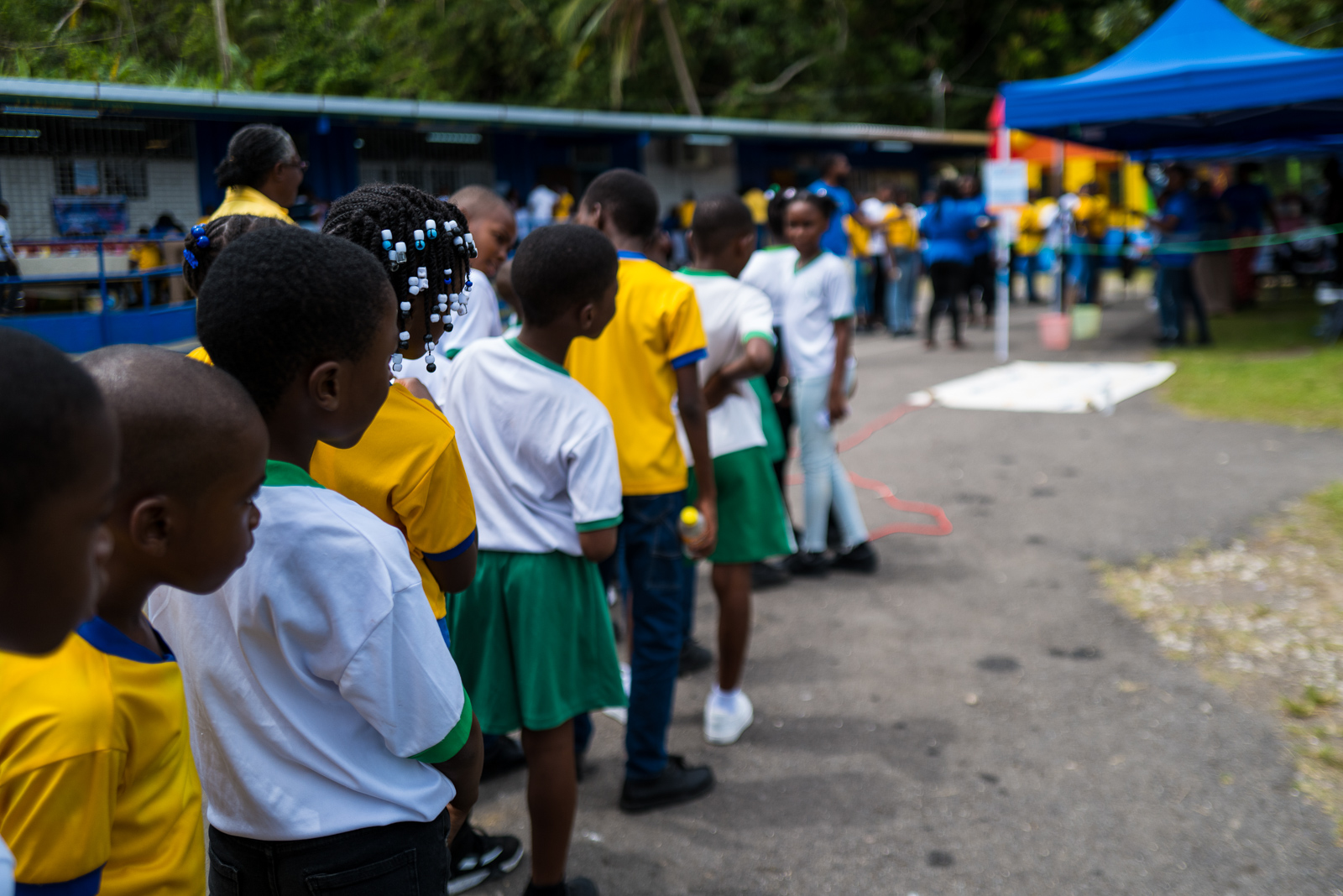
Alongside the sanitation work, we set up child-friendly spaces, or CFSs: protected areas where children can be safe from the noise and unpredictability of an emergency, and where trained staff offer psychological first aid, a structured form of immediate support focused on stability and coping rather than clinical treatment. What became clear quickly was how strong the demand for structured learning was. Parents asked for it, children asked for it in their own way, and the absence of anything resembling a school day was visible in how children moved through the camp. So we developed the program further and turned the child-friendly spaces into temporary learning spaces: informal classrooms that do not replace school but keep learning and routine going until schools can reopen. The program is still evolving, and that willingness to let what you see on the ground reshape what you planned is often where the real work lies.
Measured by scale and by what the affected areas looked like, Venezuela is the most devastating event I have worked on this year. The comparison that keeps coming back to me is an engineering one: cascade failure. When a single structural element fails, its load shifts to its neighbors, and if those were already under stress, you get not one collapse but a sequence. Venezuela's health system, housing and infrastructure were under heavy strain long before June 24. The earthquakes did not create that fragility. They removed the last margins that had been holding it together and made visible the distance between what systems are meant to provide and what they can deliver under pressure. In between, on an old golf course, people built what was missing themselves, one tent, one latrine, one shared internet connection at a time.
The Golfcamp was supposed to come down after a week, but just continued to stay.