

Jamaica - Broken Trees, Missing Eyes, and the Children Nobody Is Counting
Three months after Hurricane Melissa, the storm is easiest to see in the trees. Many houses in western Jamaica have already been patched up: roofs re-covered, fences rebuilt, debris cleared from the yards. But once the road leaves the coast and climbs into the hills toward the center of the island's western half, the slopes tell a different story. Trunk after trunk is snapped halfway up, the crowns gone, the bare stumps standing in rows like broken matchsticks. After a while I caught myself reading the hillsides the way an engineer reads a failure pattern: almost every break leaning the same way, a record of the wind written into the landscape, months after the wind itself was gone.
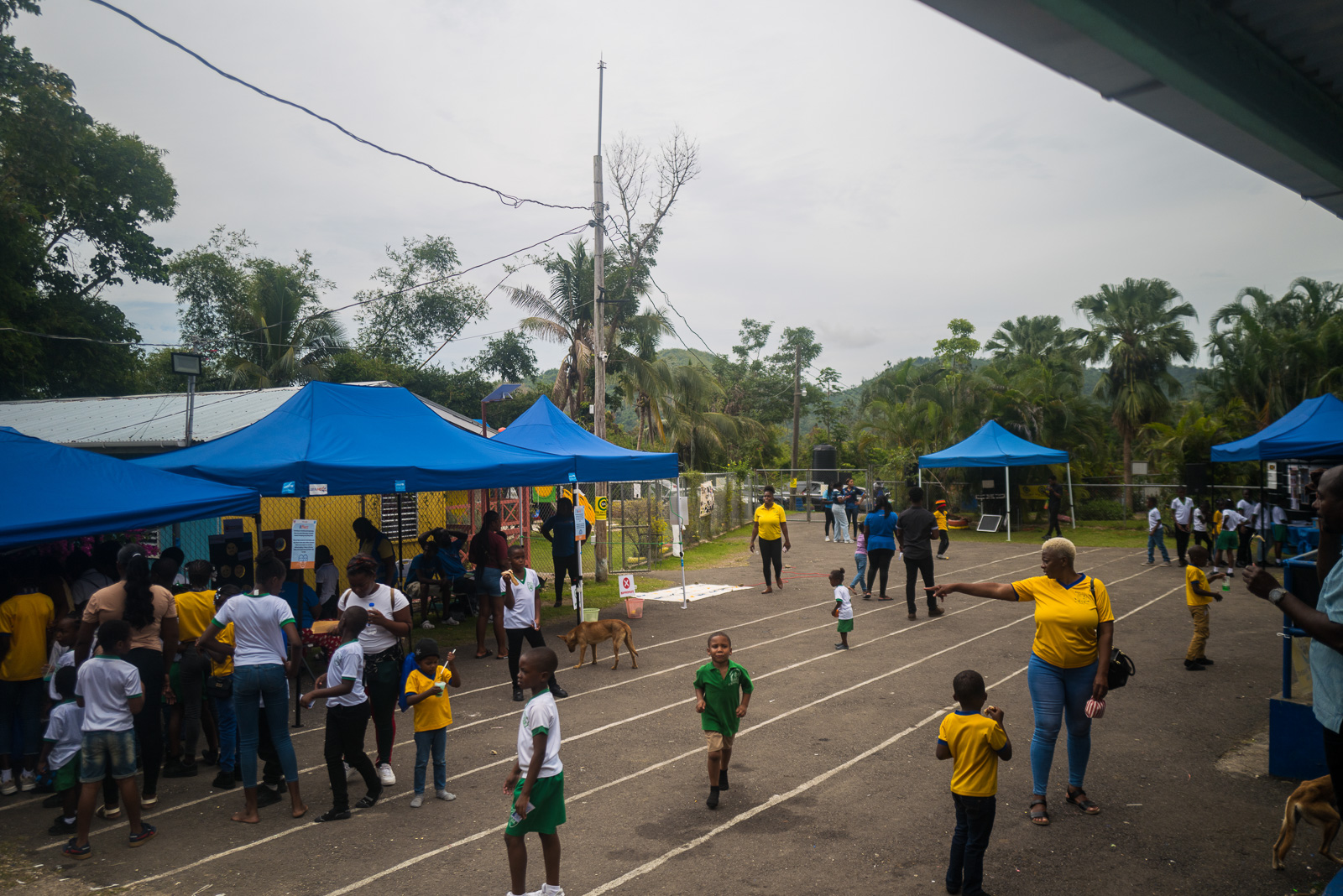
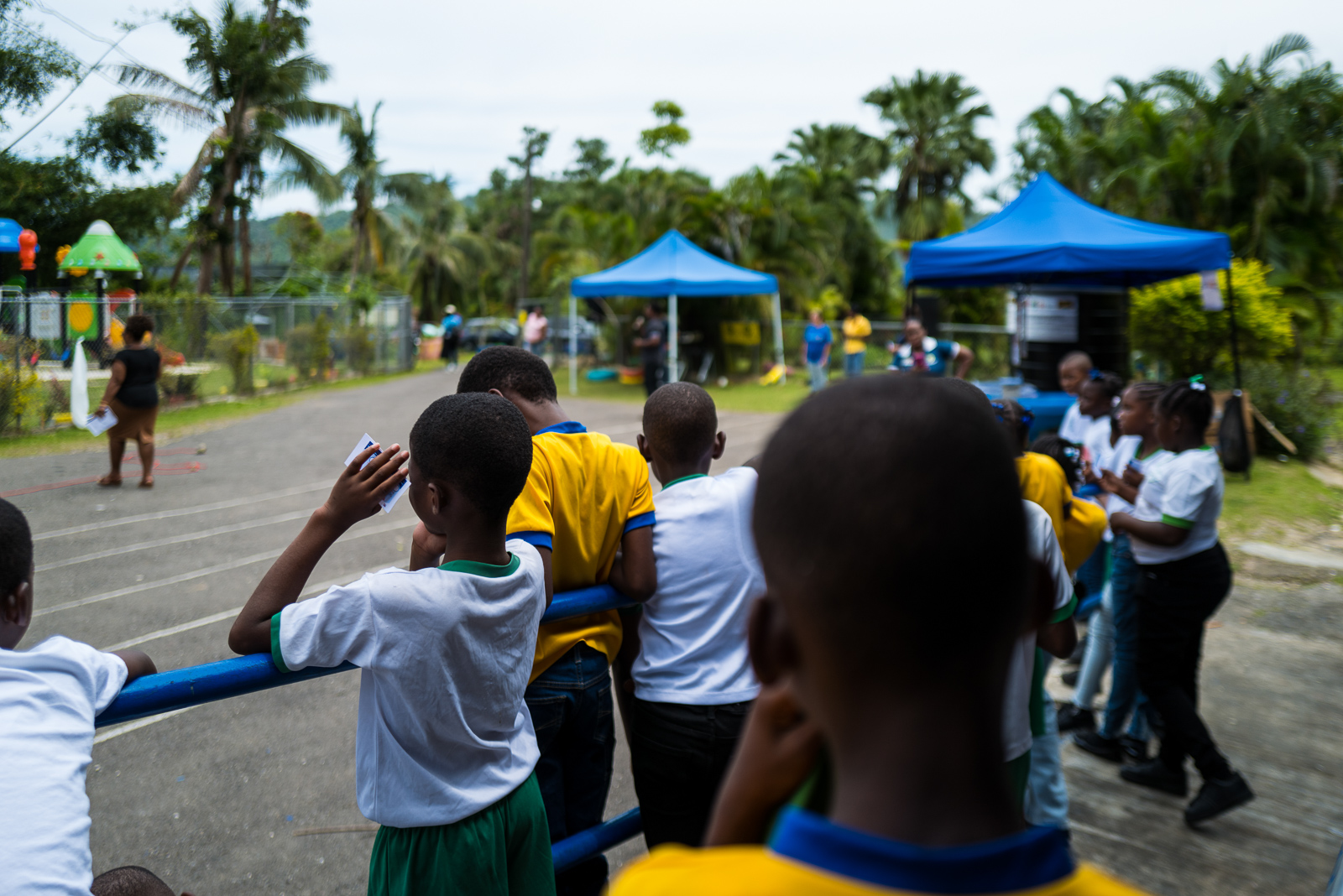
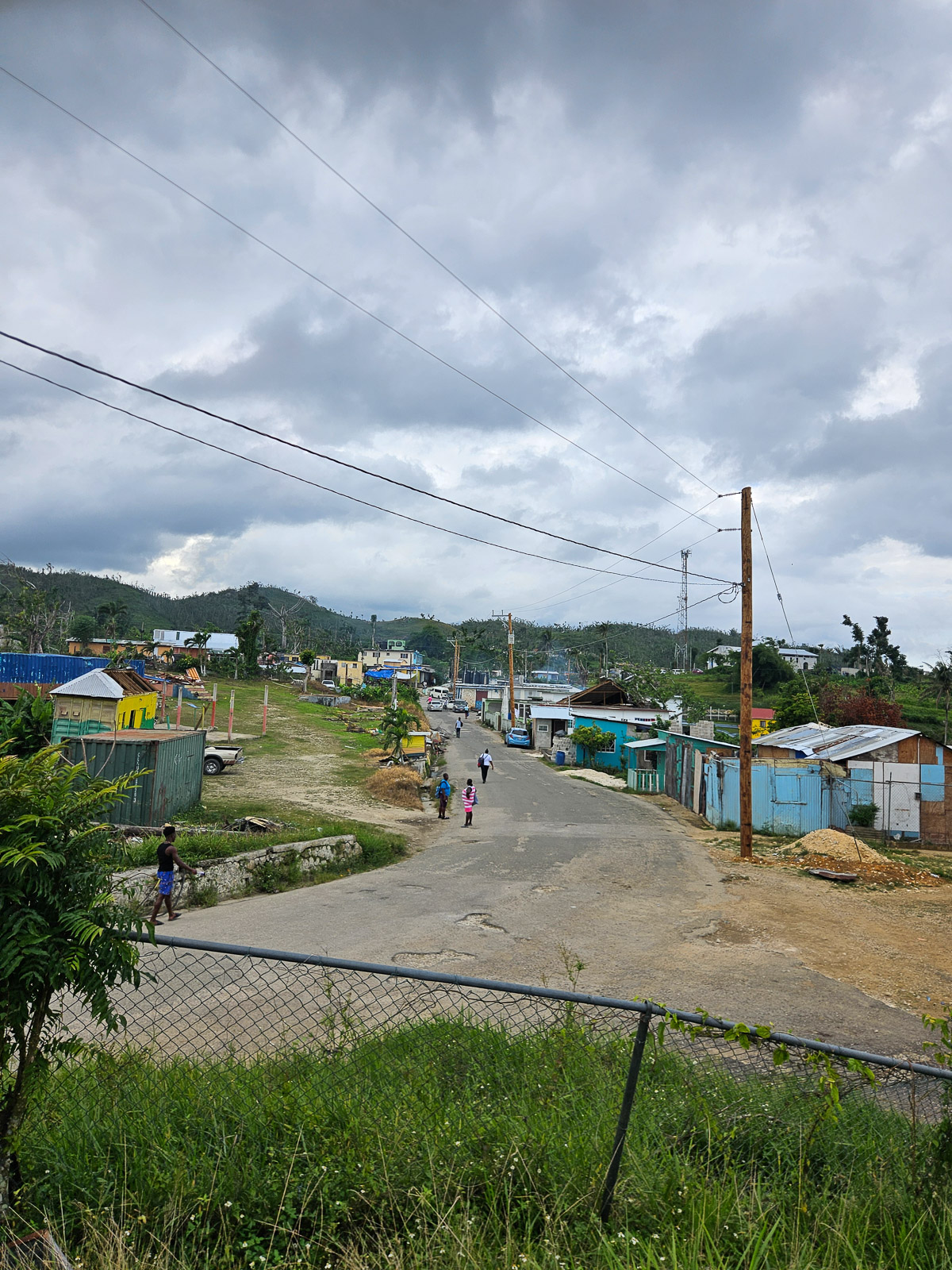
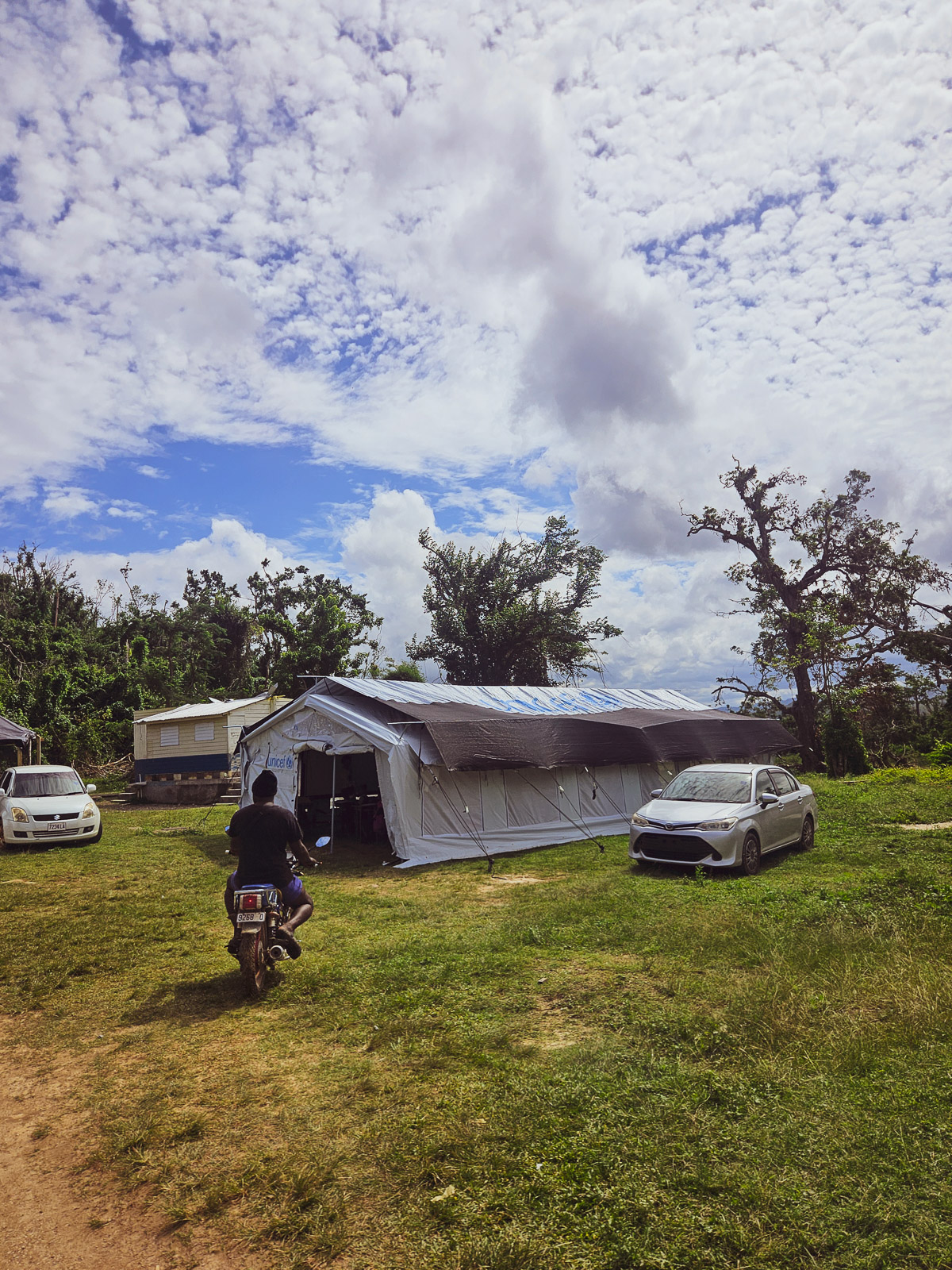
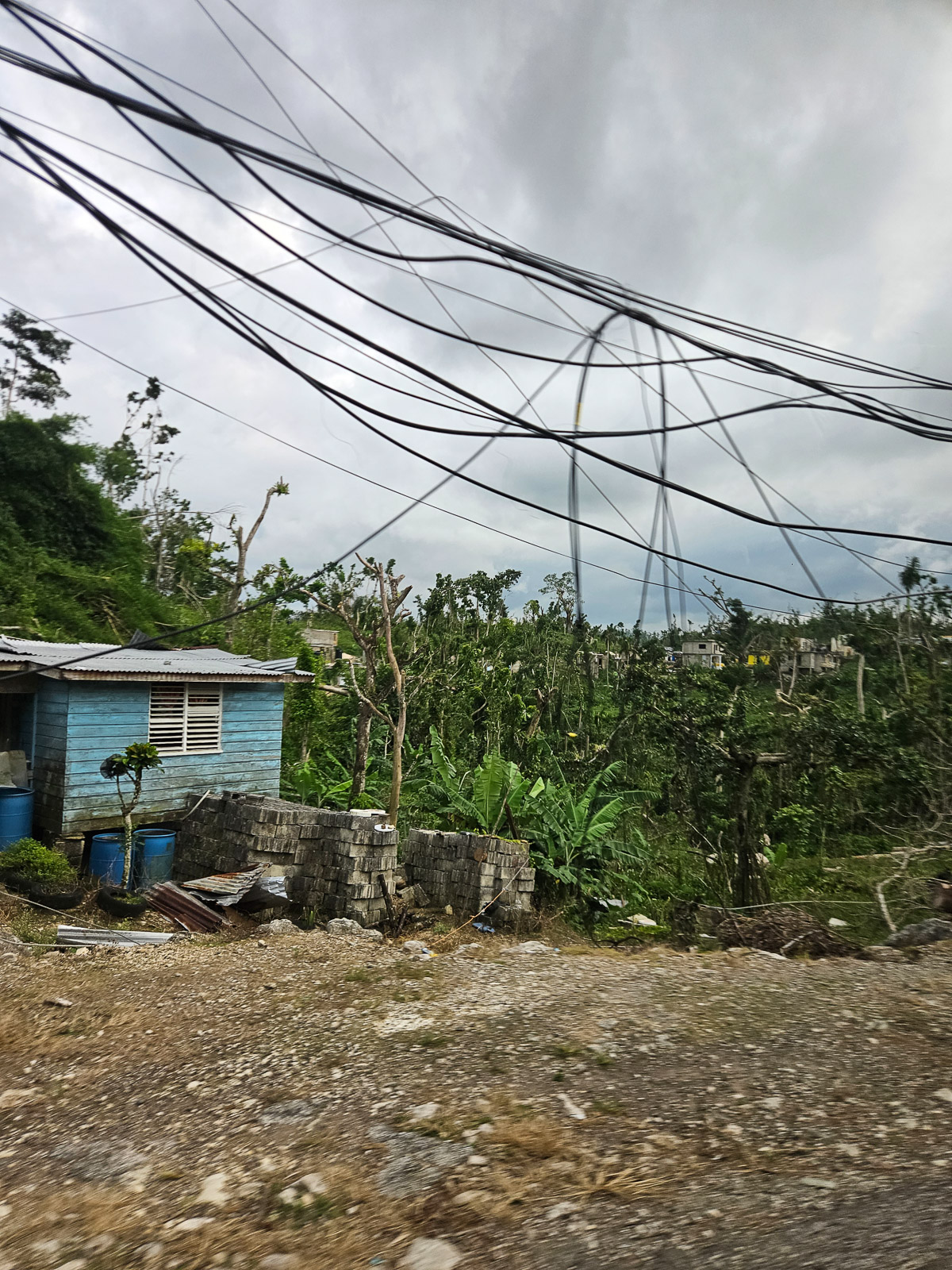
The roads carry the same memory. Our car moves in a slow slalom around potholes, some shallow, some deep enough to swallow a wheel, past small villages, churches, roadside stalls, and schools painted in bright yellow and blue.
An hour's drive away, on the north coast, another Jamaica is already back at full speed. Cruise ships tie up in Montego Bay, buses shuttle visitors between the airport and the all-inclusive resorts along the beaches, and tourism, one of the island's most important sources of income, runs as if the season had never been interrupted. Both pictures are true at the same time. Most visitors will only ever see one of them.
Melissa made landfall in southwestern Jamaica on October 28, 2025, as a Category 5 hurricane, the strongest storm ever to hit the island directly. The government confirmed 45 deaths. Three weeks later, schooling was still disrupted for nearly 477,000 children across Jamaica, Cuba, and Haiti. I arrived at the end of January to support a UNICEF child protection program in the western parishes of Hanover, Trelawny, and Westmoreland, as the response shifted from emergency to recovery.
This piece is a little different from the other Field Notes. It is less about what we did and more about a risk that, in my experience, gets far less attention than it deserves.
Because what the broken trees do not show is what happens to the protection around children.
In normal times, a child is surrounded by a net that nobody designed and few people notice. A teacher sees a bruise on Monday morning. A neighbor hears shouting through a thin wall. A grandmother lives two houses down, an older cousin walks the younger ones to school, a pastor knows which family is struggling. None of these people think of themselves as part of a child protection system. Together, they are the system.
A disaster tears this net in several places at once. Schools close or lose their roofs, and with them go the daily routine and the adults who see a child every day. Families move in with relatives or into crowded temporary shelters, so neighborhoods scatter and strangers suddenly share living space. Parents lose income, crops, or the house itself, and stress builds up inside households with nowhere to go. Too often it is released as violence against those with the least power, women and children. The authorities that would normally follow up on a report are stretched by the emergency themselves. And in the worst cases, children are separated from their families entirely, which is when exploitation and trafficking become real risks.
Here the engineer in me wants to point at a measurement problem. If you think of all those teachers, neighbors, and relatives as a distributed sensor network, then a disaster does not only raise the risk. It also knocks out the sensors. Jamaica offers an almost textbook example from a different crisis. When schools closed during the COVID-19 pandemic, reports of child abuse to the national registry dropped by about 22 percent in 2020, from more than 12,600 the year before to under 10,000. Child protection officials did not read this as good news. They pointed out that teachers are among the most important sources of reports, and that children had simply lost contact with the adults who would normally notice. The signal had not disappeared. The instruments had gone dark.
This is also why research on disasters and child abuse is surprisingly inconclusive. Some studies show clear increases: after Hurricane Floyd flooded eastern North Carolina in 1999, cases of inflicted traumatic brain injury in young children rose sharply in the most affected counties during the following six months. A study of three major US disasters found disproportionately more abuse reports after two of them. Yet a systematic review and meta-analysis found no consistent association across the available studies, while noting that weak and uneven data made firm conclusions difficult. In other words, we often try to measure the problem with exactly the systems the disaster has just taken offline.
The risk becomes most visible when separation happens at scale. When flash floods tore through Nepal's Bhote Koshi valley in late August 2026, many children were at school or on their way there when the water came. Two weeks later, around 540 children were still separated from their parents or unaccompanied. Child protection organizations were helping police at checkpoints to stop children from being moved illegally, because in a region where cross-border trafficking has long been a concern, a child without papers or guardians is exactly what traffickers look for.
In western Jamaica, the clearest picture of that net, and of how people try to hold it together, came from a school principal we met in the hills.
Her school is very small, the kind of place where every teacher knows every child by name. The hurricane brought the roof down, and the classroom can no longer be used. Lessons now take place in a former storeroom, a small space never meant to hold a full class. She told us that support from the authorities was not arriving, or only very slowly. So she had stopped waiting. Through personal connections, many of them in the United States, she was organizing the repairs herself, trying to get the water supply running again and the building back into shape, one call and one favor at a time. All of us left that visit impressed.
Thinking back, she was the network I described above, compressed into a single person. As long as her school runs, even in a storeroom, there is a place where children come every morning and an adult who will notice if one of them stops coming.
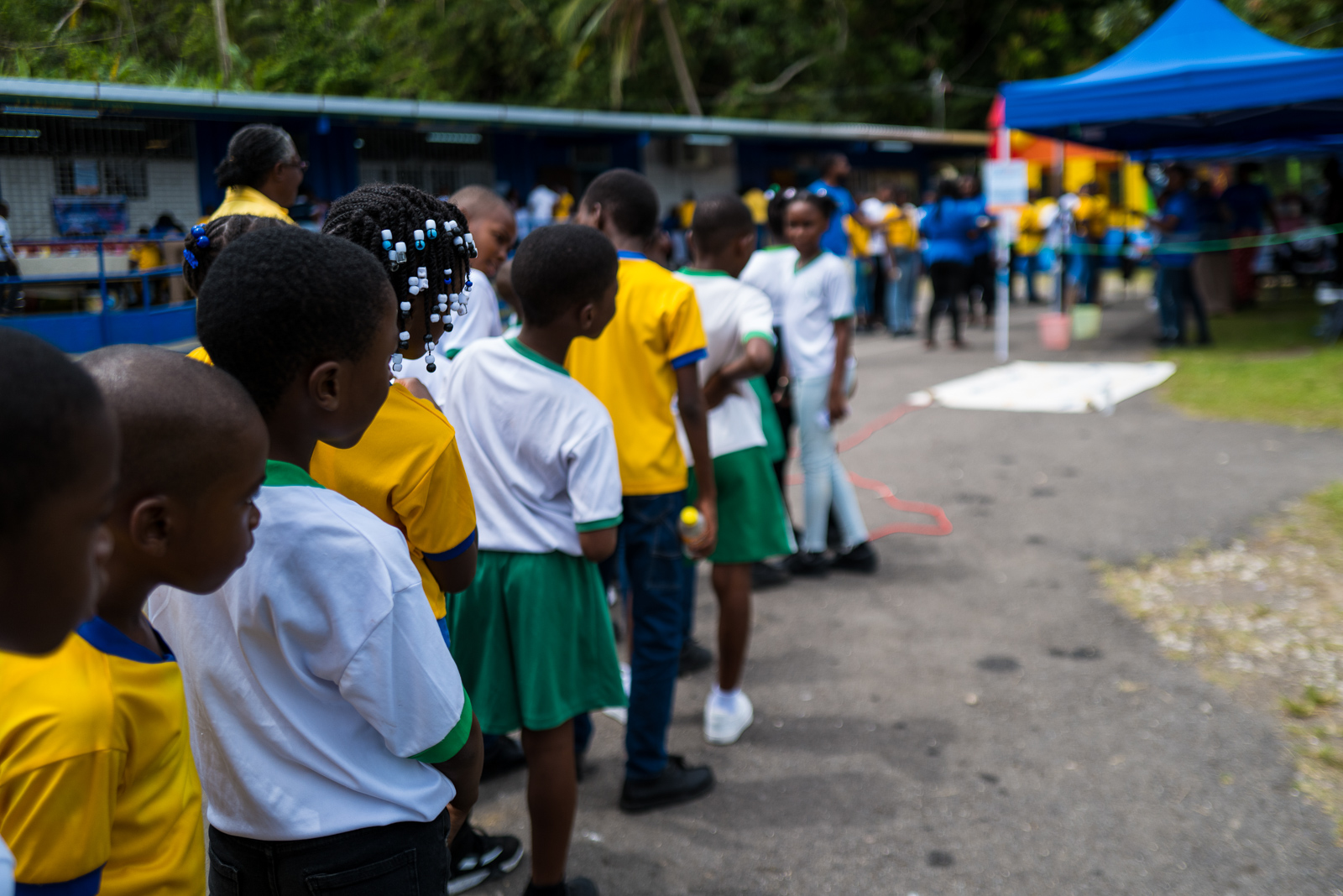
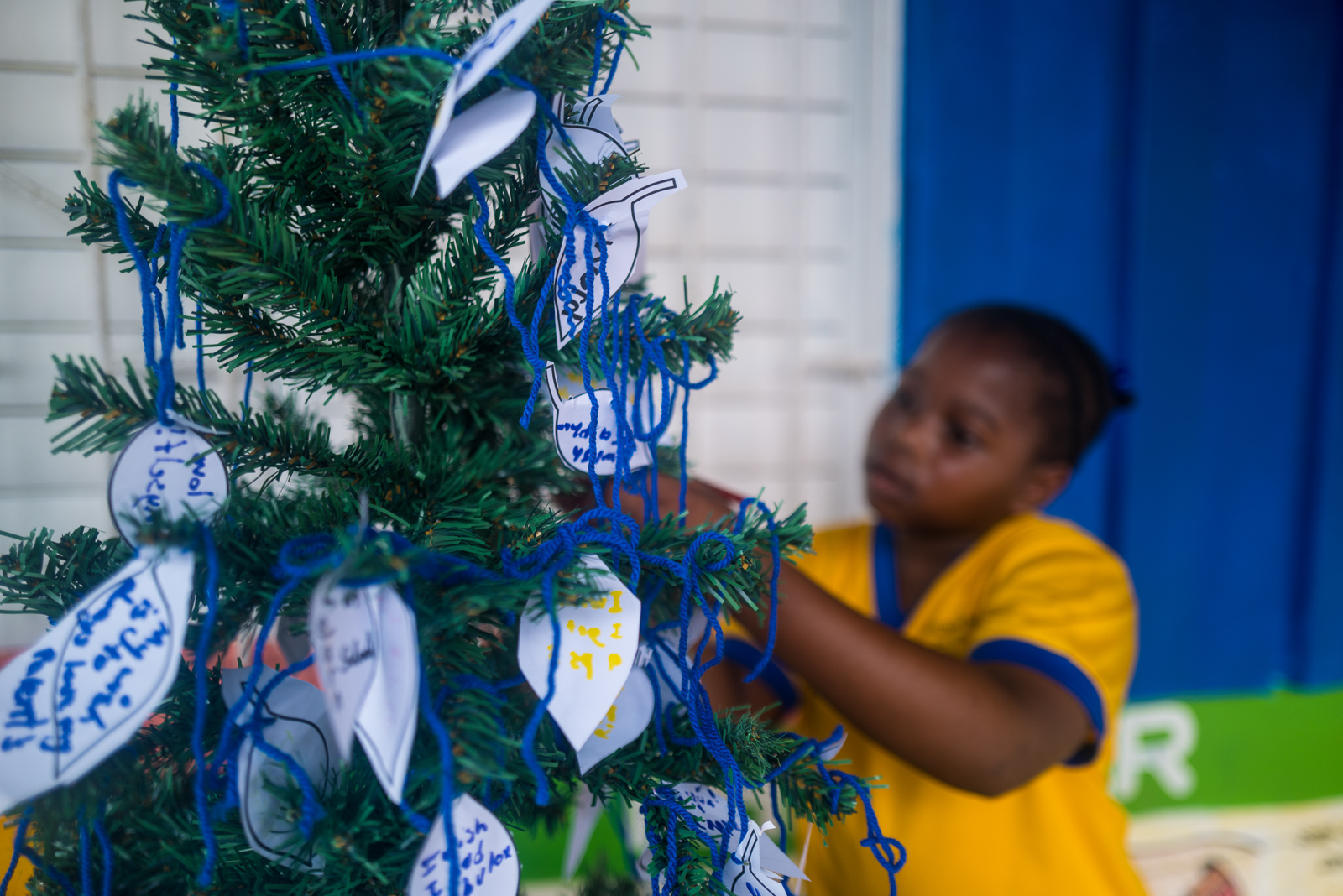
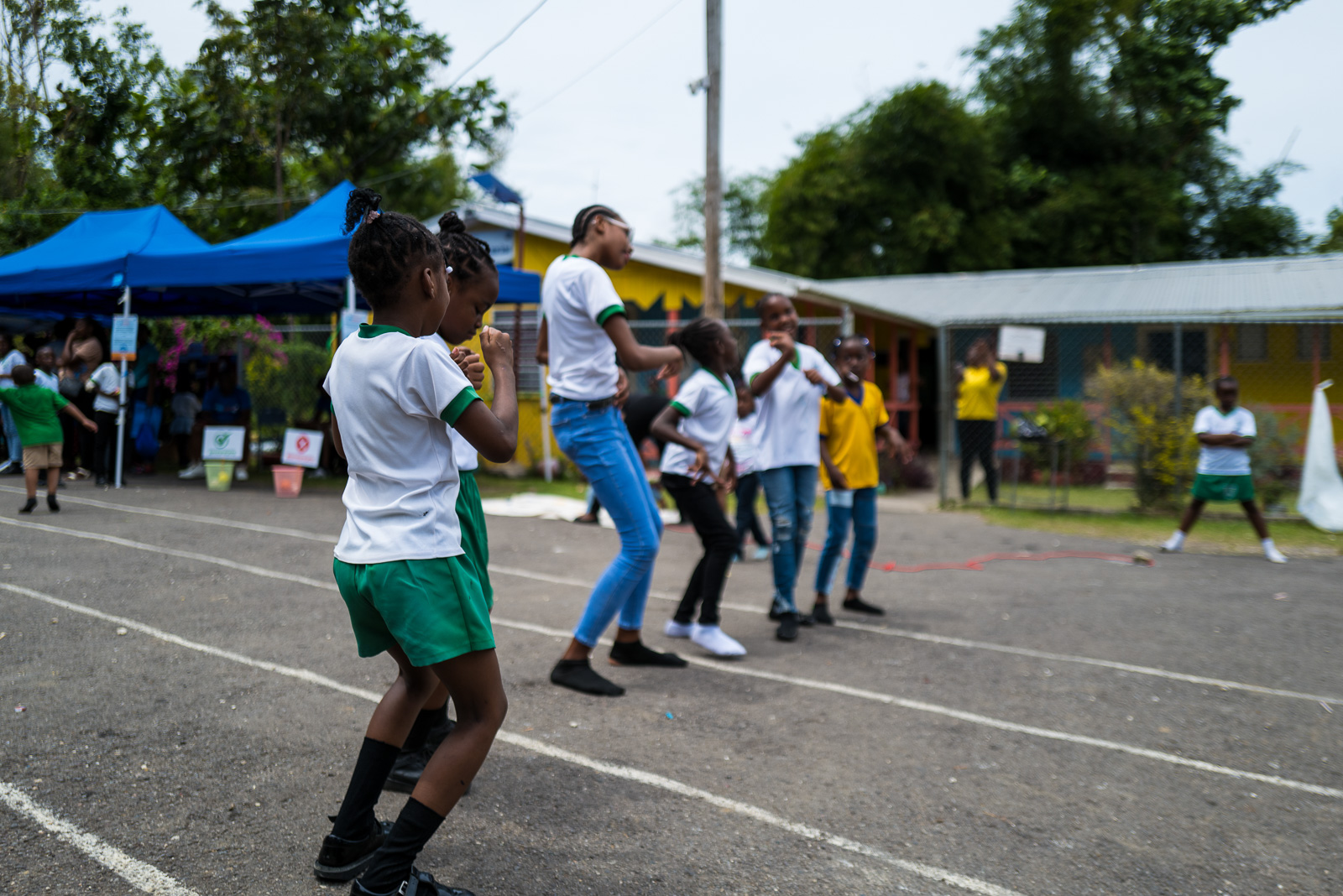
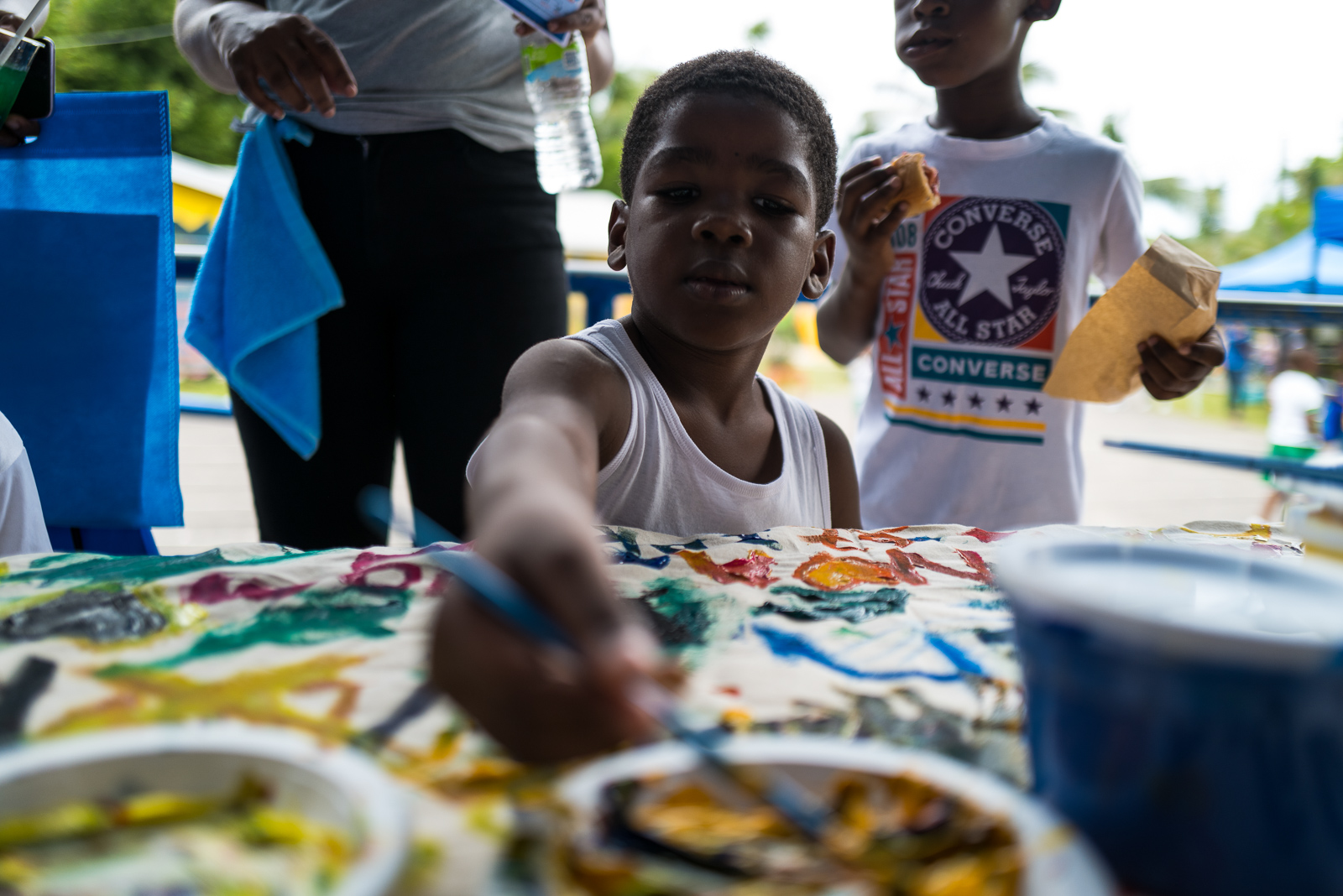
That, at its core, is what the program tried to do: rebuild the net rather than replace it. Child-friendly spaces offered structured play and psychosocial support (help with the emotional impact of what children have been through) in a community library and, through mobile teams, at schools across the three parishes. The facilitators and community mobilizers came from the same communities they worked in. The less visible part was the wiring: mapping which services exist and who to call when a facilitator, teacher, or parent sees something worrying, so that a concern travels to someone who can act on it instead of ending in a conversation. That mapping quickly showed how many of those connections were missing between community, parish, and national level.
None of this is spectacular. It does not show up in damage assessments, which count roofs, roads, and power lines. But I have come to think of the protection around a child as critical infrastructure, in the same way a water system is. It fails in the same moment, it is just as hard to see from the outside, and it is far easier to repair if you start before the gaps have consequences.
For anyone reading this at home, imagine the street you grew up on suddenly without its school, with half the neighbors gone, and every parent worried about money and a roof. Most of the adults who would quietly notice if something were wrong would be busy, or gone.
The trees on those hillsides will take years to grow back. The net around a child can be rewoven much faster, but only if someone remembers that it was torn.