

Nepal - A Mountain Tsunami, Grief Without Bodies, and a Country That Leads Its Own Response
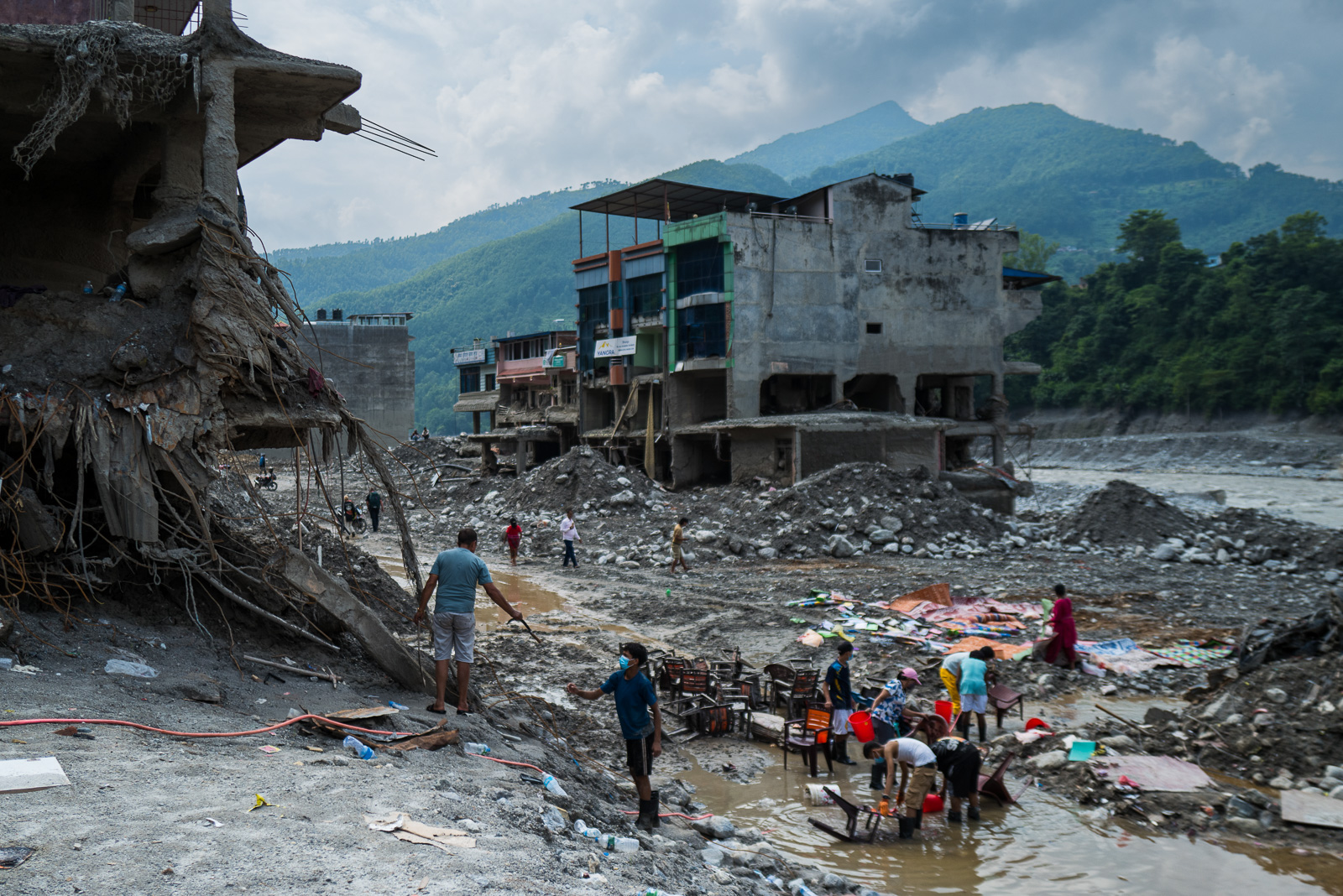
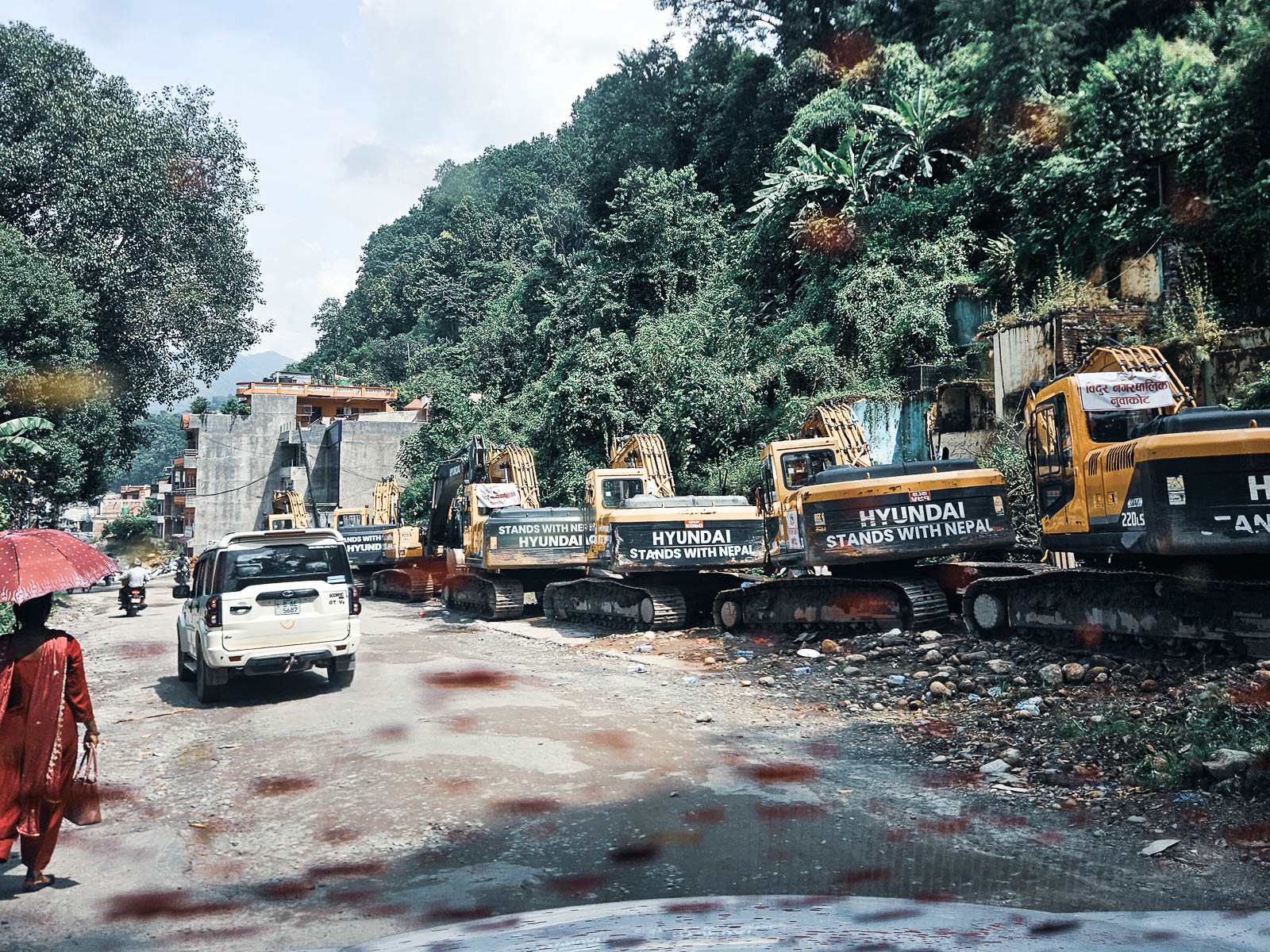
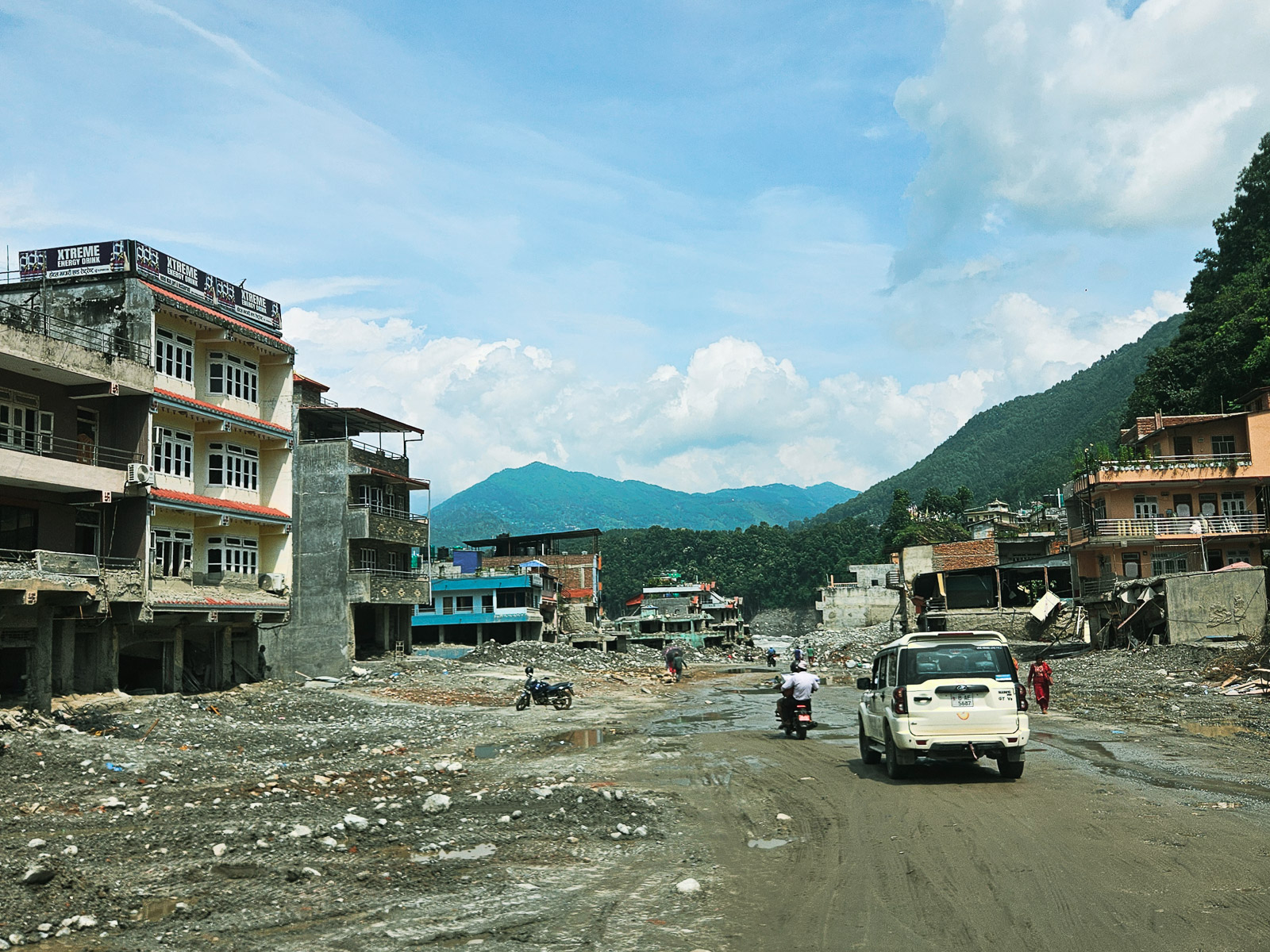
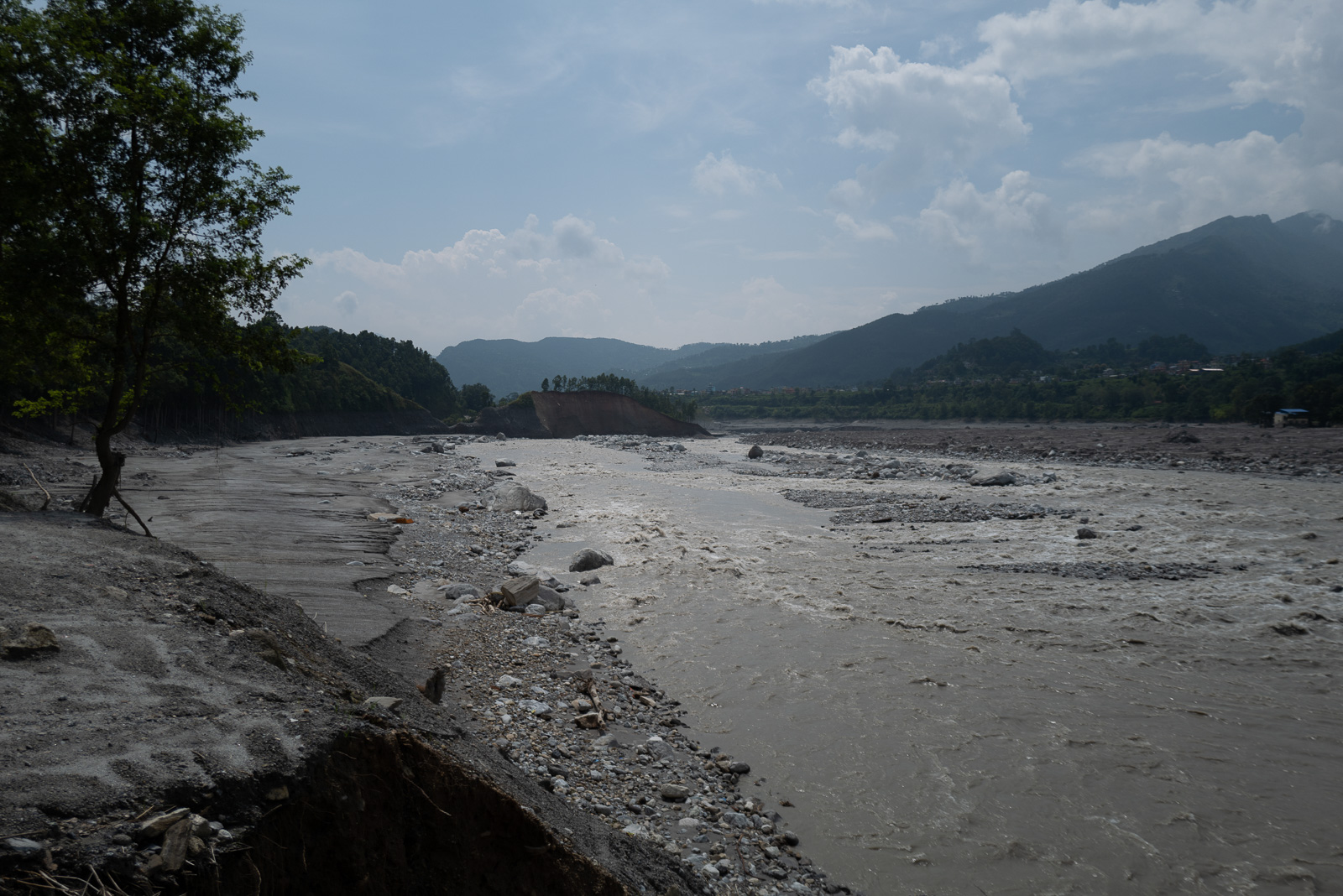
I am standing on what used to be a riverbank, trying to fit the picture in front of me into a category. During my engineering studies we went through every kind of natural hazard: landslides, glacier collapses, floods. I remember the diagrams and the case studies. I do not remember anything like this. The houses here have not collapsed, they have been torn apart. Concrete structures built to last for decades lie in broken pieces along the bank, and in places the land itself is simply gone, as if someone had cut a slice out of the valley and carried it away.
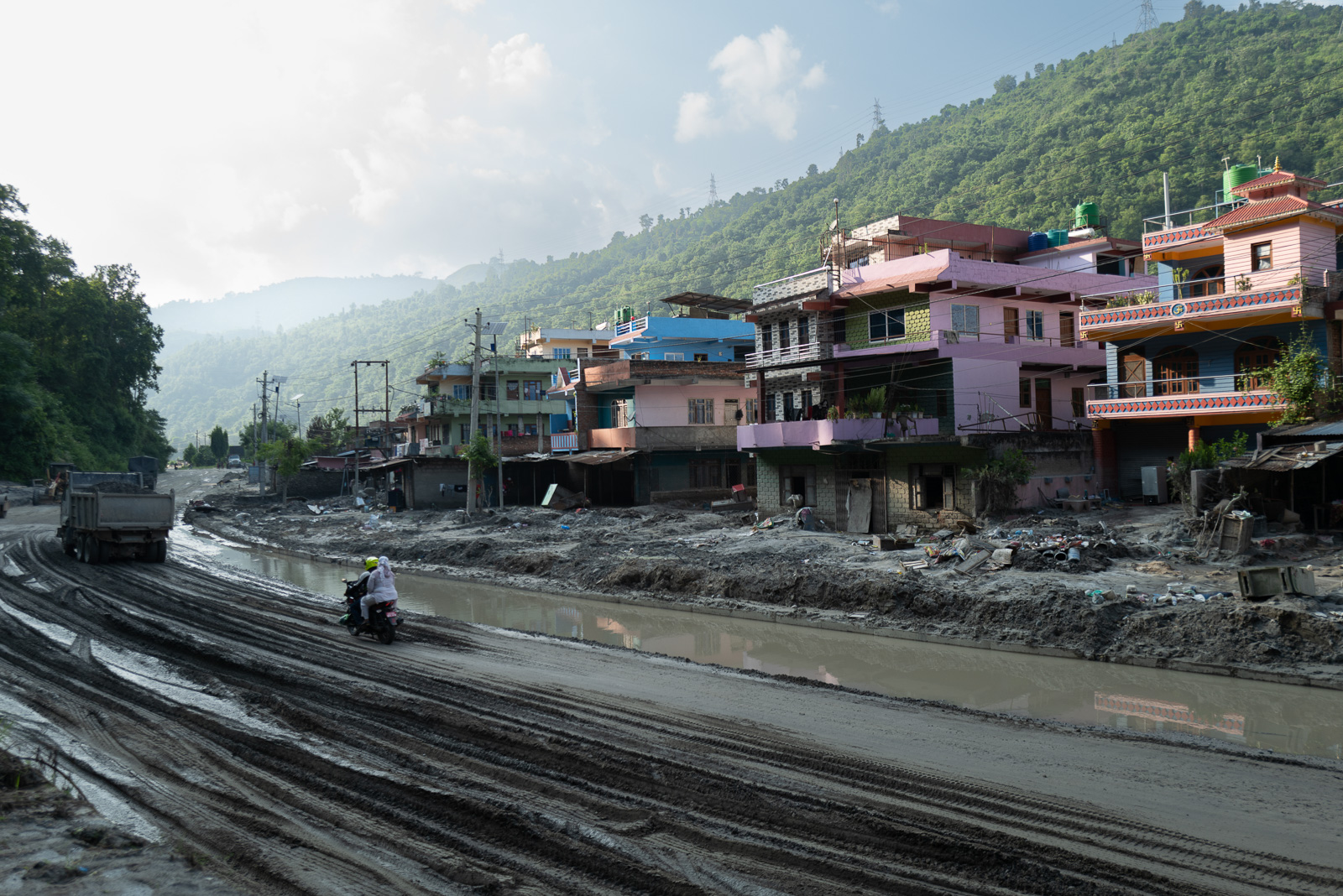
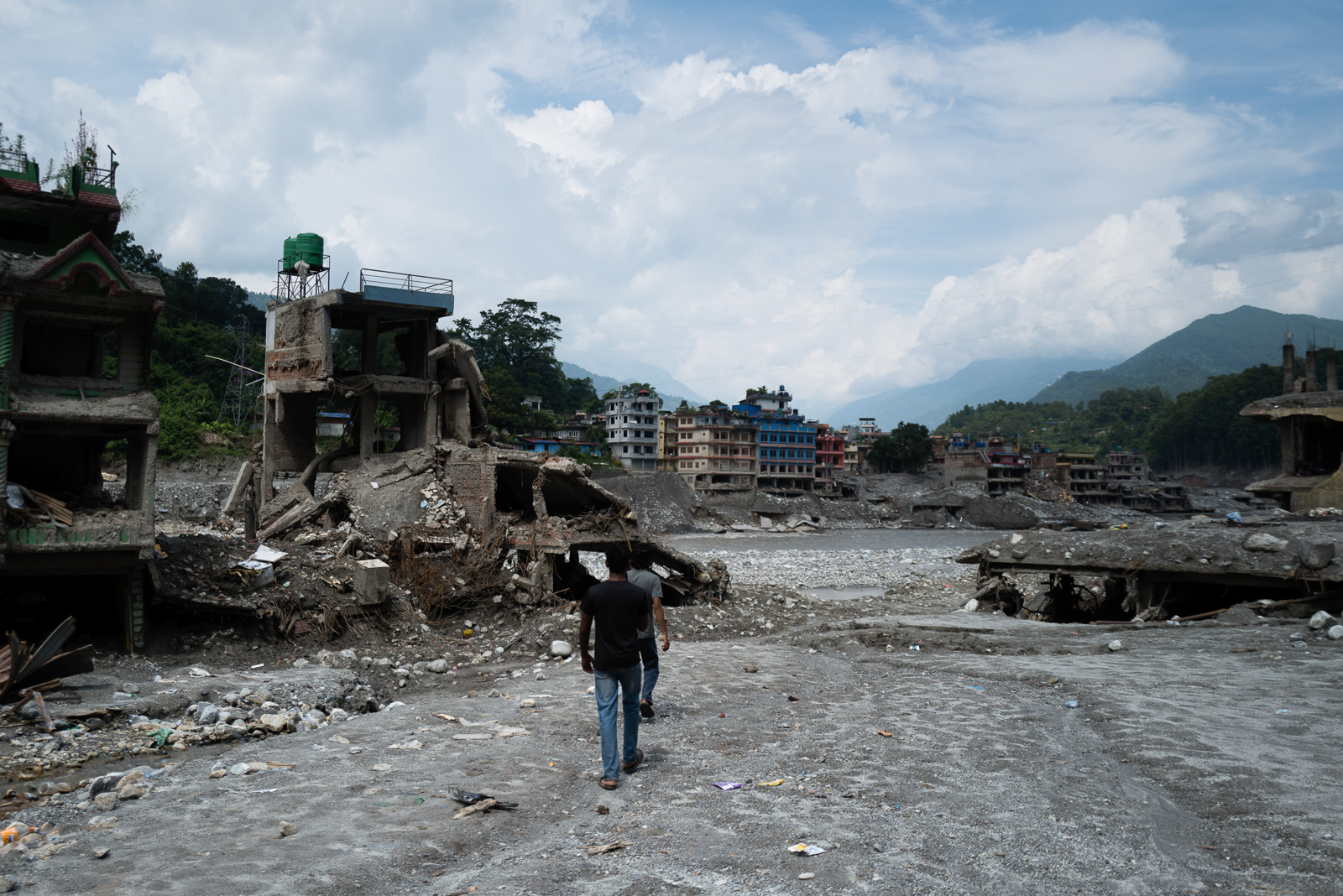
Nepalis have a name for what happened here: a mountain tsunami. It was my first thought as well, before I had heard anyone say it.
To understand what this flood destroyed, it helps to follow the river. The Trishuli comes down from the border with Tibet, where Tamang villages hang on steep slopes and the road north has long been one of the main overland routes to Mount Kailash, a mountain sacred to Hindus, Buddhists, Jains and followers of the Bön religion. From there it cuts south through terraced hills and bazaar towns, past hydropower plants built into the gorge, until it meets the Kali Gandaki at a confluence Hindus consider holy and continues as the Narayani into the subtropical lowlands. In a few hours on the road you pass through languages, faiths and ways of life that in Europe would be separated by national borders. Nepal's 2021 census counted 142 caste and ethnic groups and 124 mother tongues, in a country only slightly larger than Greece. The flood ran through this entire cross-section.
On the morning of August 26, 2026, high in the mountains along the border, a mass of rock and ice broke away and fell more than a thousand meters onto the glacier below. The friction of the fall melted much of the ice, and the impact was so violent that seismographs registered it as a magnitude 5.2 earthquake. Rock, ice and meltwater became one moving mass. Near its source it surged roughly 400 meters up the valley walls. Even in the wider valley farther down it still moved faster than a person can run, and at one gauging station the river rose by nine meters in half an hour. Researchers have since described it as the largest flood in this valley in around 5,000 years.
Only gradually did I understand how big this event really was.
It was my Nepali colleagues who explained it to me, in the first days, with numbers that kept changing. In early October the official count stood at more than 1,400 dead and more than 5,000 missing in Nepal alone, and depending on the date and the source, the figures contradict each other. Some of the Nepalis I spoke to believe the true number of dead could be as high as 20,000. Nobody can say for certain, and the reasons for that are part of the story. The automatic river gauges in the upper valley, installed precisely to warn the people below, were swept away before they could send a signal. As an engineer I kept coming back to this: a sensor that stands in the path of what it measures will, in the extreme case, fail at exactly the moment it is needed. The border post and the road checkpoints went the same way, together with their lists of who had passed through. Many of the people in the valley that morning were pilgrims on their way to Kailash, a large share of them from India, and since the border between India and Nepal is open, many had never been registered anywhere.
For comparison, the 2015 earthquake, which many people outside Nepal still remember, killed close to 9,000 people. If the higher estimates for the flood are right, this disaster was worse. In the speed of today's news cycle, that has largely been lost. Whether climate change caused the collapse is not yet settled: some scientists consider it likely that warming contributed, others point out that a direct link for this particular slope failure has not been established. What is not in doubt is that the ice above these valleys is changing, and that the valleys below are full of people.
Of the thousands reported missing, only a small fraction have been found in a state that allowed identification. The river often tore bodies apart. Far downstream in the lowlands, the authorities buried nearly 200 unidentified dead in a forest because there was no more room in the morgues. This changes the nature of grief. After an earthquake, families dig through the rubble for their relatives, and even when the search ends badly, it ends. Here there was usually nothing to dig through. Psychologists call this ambiguous loss: a person is gone, but there is no body, no proof, no moment of certainty, and grief has nowhere to settle. It calls for a different kind of mental health and psychosocial support (MHPSS, the humanitarian term for everything from basic emotional first aid to specialized counseling) than the bereavement work that follows most disasters.
And it was not only houses that were washed away, but the ground they stood on. Where the land is gone, no new house can be built on the old plot. Families have lost not just their home, but the place where a home could be again.
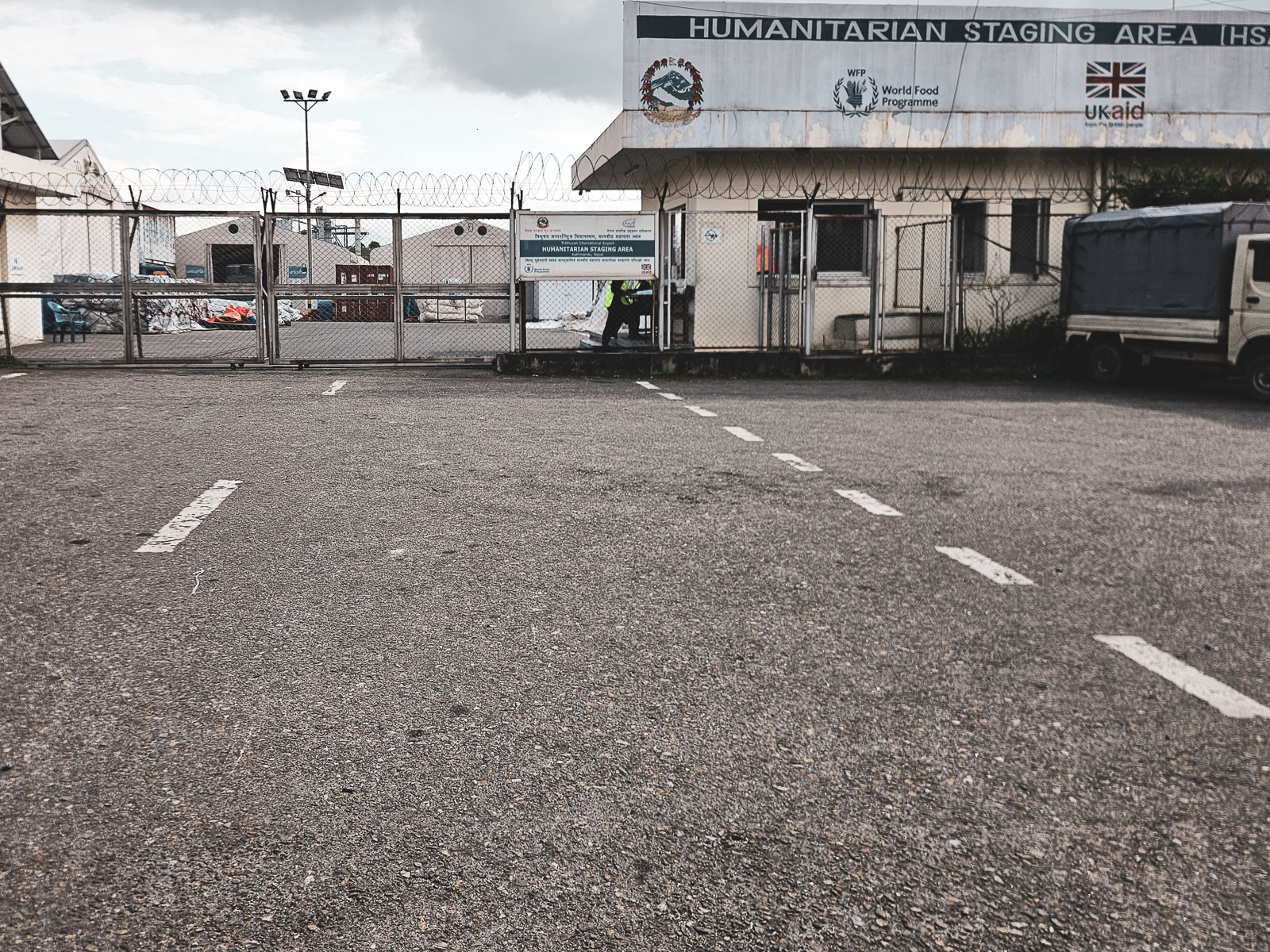
The communities hit hardest, in the upper reaches, were also the hardest to reach. The UN provided a helicopter, but only for cargo, and every flight had to be planned in detail in advance: where to land, who would unload at the other end, what exactly to bring. That is difficult to organize when phone contact with the affected villages is patchy and nobody can say with confidence how many people are still there, or what they need most.
Farther down the valley, where the roads were open, the problem was the opposite. International organizations arrived in large numbers, and a quiet competition developed over who could still find a place to run a program. At the same time, the Nepali authorities coordinated with a firmness that surprised many international staff. The cluster meetings, where organizations working on the same sector, such as water or health, divide up the work, were held in Nepali. Organizations without Nepali staff could sit in the room, but they could not really take part.
A Nepali colleague of ours, who had worked through the response to the 2015 earthquake, told me that this was the biggest difference: unlike in 2015, the authorities now acted with real strength and self-confidence. That did not happen by accident: after the earthquake, Nepal passed a new disaster management law and built a national authority whose job is precisely this kind of coordination. For anyone used to responses where international actors set the agenda, it is an instructive reversal.
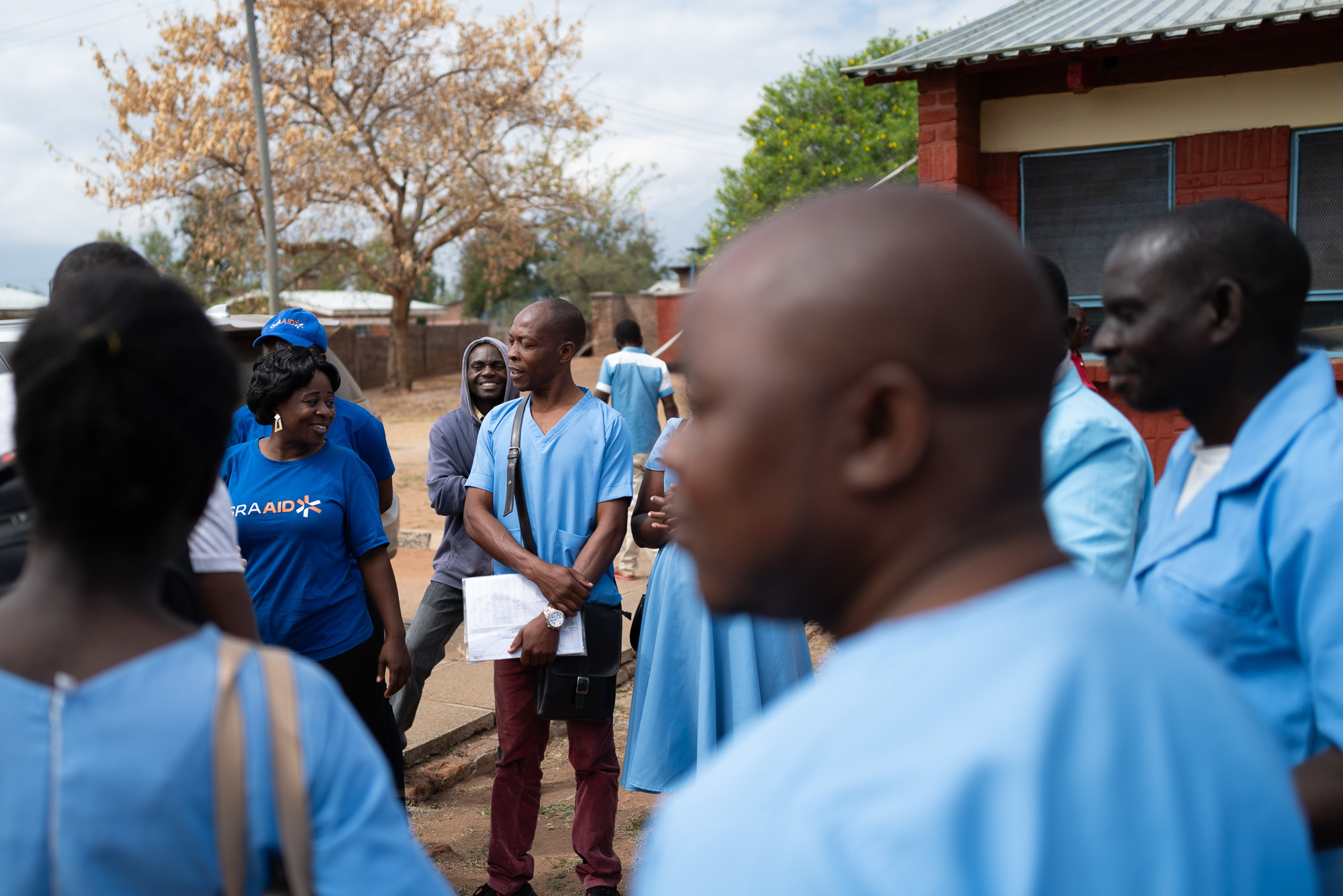
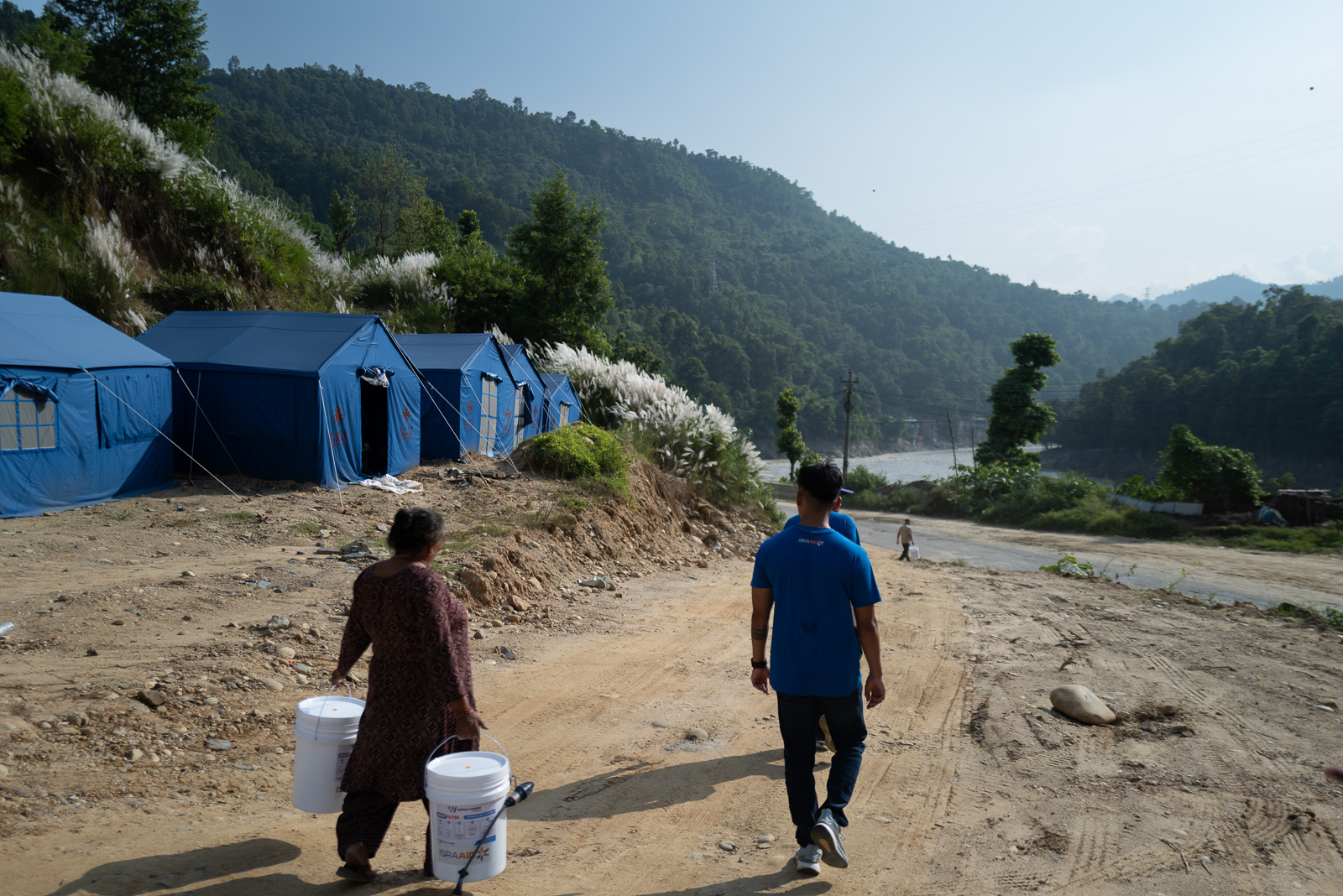
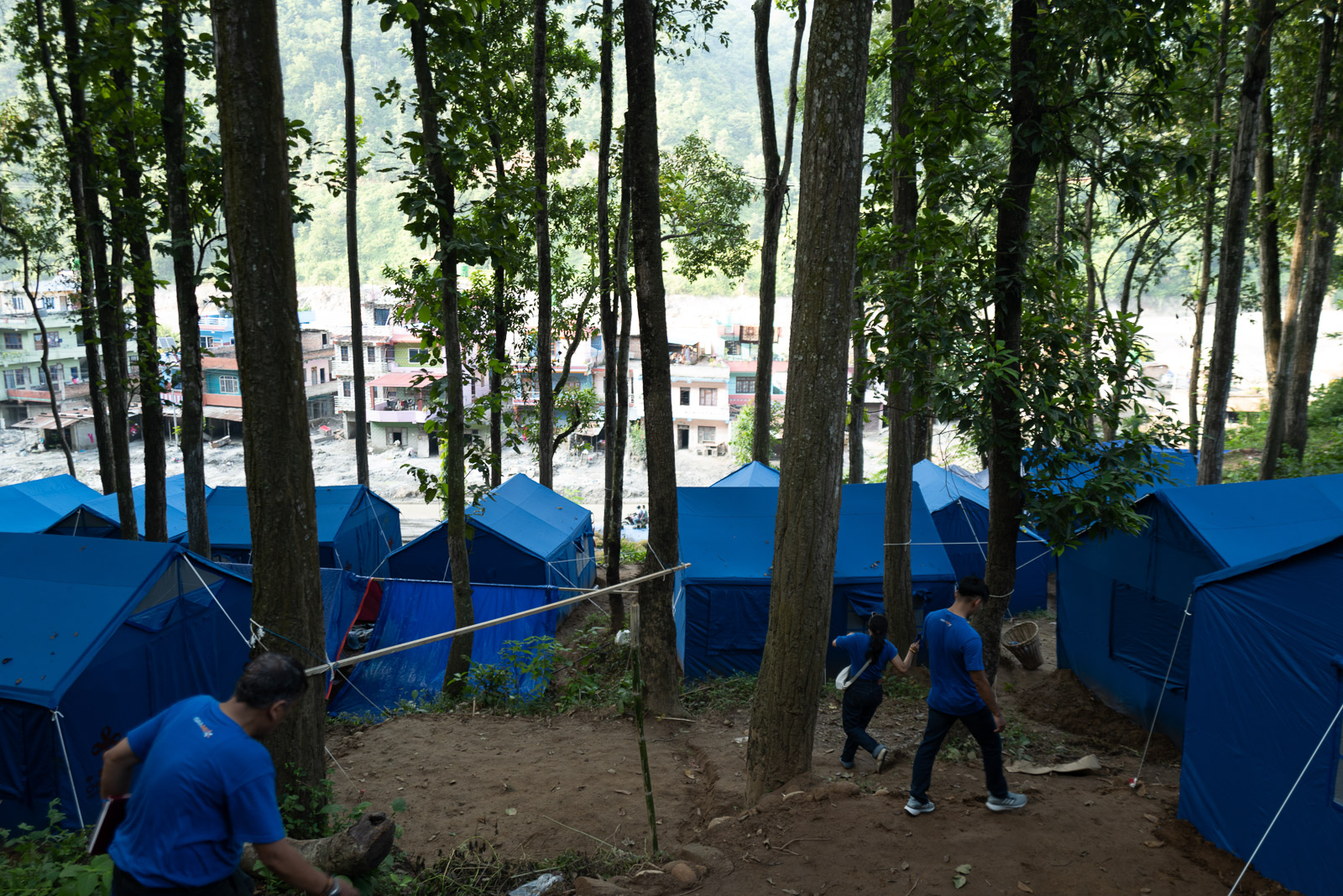
We decided to focus farther downstream, in the middle and lower reaches of the river. These areas were less severely hit, but they also received far less attention. The water was a problem everywhere: rivers and springs had been fouled by sediment, and by the dead. Dozens of drinking water systems along the corridor had been damaged, and in the crowded temporary shelters, water was short and tests found fecal bacteria. Our work there included health services and safe water. But the part of it that stayed with me most was something less visible.
In several sites we set up women- and girl-friendly spaces. In practice, that can be as simple as a tent placed a little apart from the rest of the camp. The placement is the whole point, and the engineer in me thinks of it as a design problem: close enough to be reached without a long walk, far enough away that what is said inside stays inside. In a crowded shelter, women rarely have a space of their own. Here they do, and the team can reach them directly: for psychosocial support, for counseling on gender-based violence (GBV, violence directed at someone because of their gender, which reliably increases after disasters, when families are displaced and normal protections break down), and to identify those who are particularly vulnerable or need specialized care. A woman whose husband is listed as missing may not be able to grieve in front of a hundred people. In a tent set apart, she may at least be able to speak. What makes these spaces work is not the tent, but how well they are tied into structures that already exist: local women's groups, health posts, municipal staff. A space that stands outside these structures ends when the aid organization leaves. One that is woven into them can last.
For the communities upriver that remain so hard to reach, we want to revive an approach that Nepali partners developed after the 2015 earthquake. Theater is a deeply familiar form in Nepali villages. After the earthquake, performances with well-known Nepali actors were used to talk about mental health and loss, with specialized psychosocial staff present to pick up what the plays opened up. A performance draws a whole village together in a way that no information session can, and it builds the trust needed to bring in other programs afterwards. It is the kind of pattern I find myself looking for in every mission: a solution designed for one disaster, carried over to the next, by the people who know their own country best.
That, in the end, was my strongest impression. The Nepali team I worked with was highly experienced and well structured, and again and again I saw a clear strategic sense of where help would actually make a difference, rather than where it would be most visible. They did not need to be told how their country works. My role was largely to add to what was already there.
At home, when someone dies, there is almost always a body, a certificate, a funeral, a grave to visit. We rarely think about how much of our grieving depends on these things until they are missing. In the Trishuli valley, for thousands of families, they are missing, and they may never come.
The river took the houses, the land beneath them, and often even the dead. What it could not wash away was a society that has learned, disaster by disaster, how to carry what is left.